

Most online businesses don't have a traffic problem. They have a funnel problem. I know this because I lived it. Before I figured out what actually drives online revenue, I built 13 stores that failed. Not because I struggled to attract visitors to the website, but because I was selling low-ticket products without a clear system for guiding prospects after they arrived.
The moment I stopped chasing traffic and started managing the journey from first click to purchase, everything changed. In my second month selling high-ticket products, I generated $170,000 in revenue. The month after that, $300,000. The difference wasn't the product but the system behind it.
This guide covers what sales funnel management actually is, why most businesses get it wrong, and exactly what to do at each stage to convert more of the traffic you're already getting.
What is Sales Funnel Management?
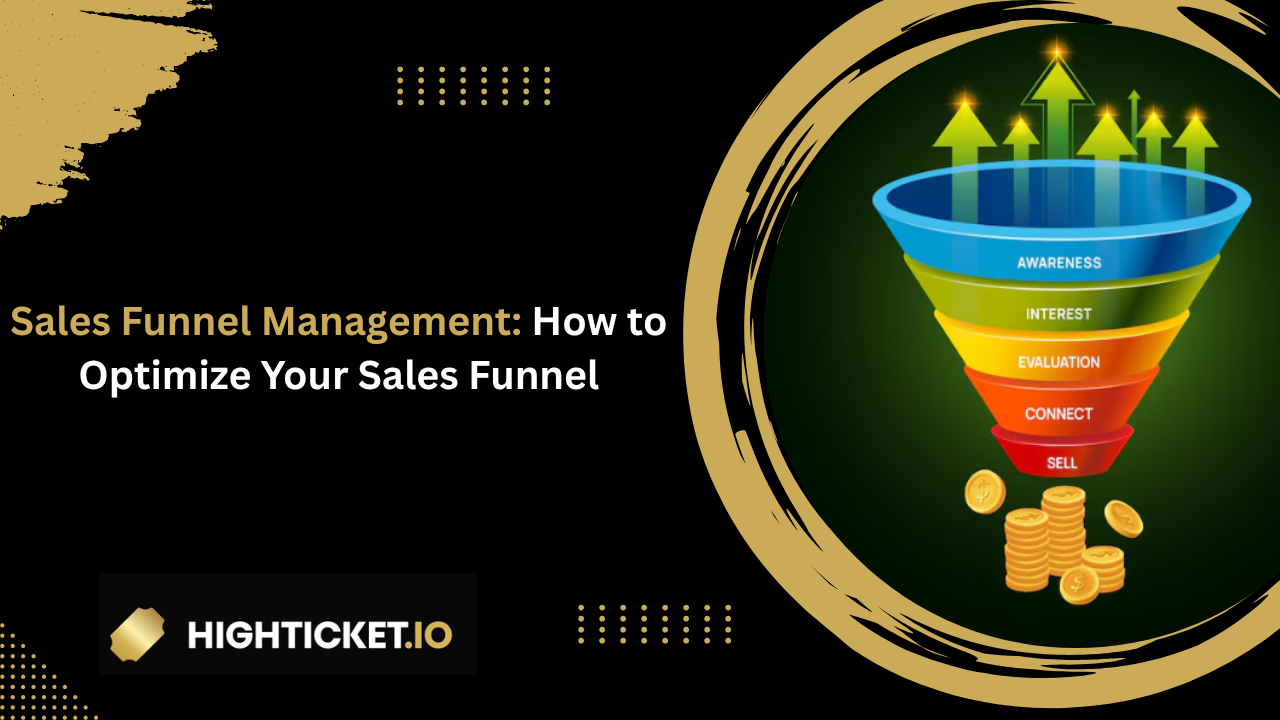
A sales funnel is a strategic framework that maps the journey a prospect takes from first discovering your business to making a purchase. Sales funnel management, on the other hand, is the active process of overseeing, measuring, and optimizing that journey so more people move through it successfully.
The word "management" means that you're not just creating a sales funnel and leaving it alone. Instead, you're actively monitoring how prospects move through each stage, identifying where people drop off, and making improvements to increase conversions and sales.
It involves tracking customer behavior, refining messaging, improving follow-ups, and ensuring each stage of the funnel guides potential customers closer to a purchase. Think of it as tending a garden rather than simply planting seeds and hoping for the best.
In practice, sales funnel management includes:
- Defining your target audience
- Building the infrastructure to capture and nurture leads
- Tracking where prospects drop off
- Running tests to improve those weak points
- Aligning your marketing and sales activities around shared goals
- Using automation to handle the repetitive work so your team can focus on the high-value interactions.
Why Sales Funnel Management Matters for Online Businesses
Here's why you need to manage your sales funnel:
1. It improves conversion rates
When you track behavior at each stage of the funnel, you'd see exactly where interest drops off, which messages resonate, and which offers generate revenue. Even a modest improvement in conversion rate at a single stage can increase your business's revenue.
For instance, if your funnel converts leads to customers at 3% and you get that to 5%, that's a 66% increase in revenue from the same traffic volume.
2. It Aligns Sales and Marketing Teams
Sales and marketing often operate separately, which can create friction. Marketing may focus on generating leads, while sales may feel those leads aren't ready to buy. Sales may also close deals without clear insight into which marketing efforts influenced them.
Sales funnel management solves this by giving both teams visibility into the customer journey. They can track where leads come from, how they move through the funnel, where they drop off, and when they're ready for sales outreach. This creates better communication, improves lead quality, and helps both teams work toward the same revenue goals.
3. It Increases Future Sales and Customer Retention
A well-managed funnel doesn't end at the first purchase. The most profitable online businesses I've studied generate a significant portion of their revenue from existing customers through upsells, cross-sells, and repeat purchases. Managing your funnel means having systems for post-purchase engagement, not just lead generation. Since these customers already know and trust your business, they are often easier and less expensive to convert than brand-new leads.
4. It Streamlines the Sales Process
A properly managed sales funnel creates a clear path from first contact to conversion. Each stage has a specific goal and next step, making it easier for both your team and potential customers to move through the process. Leads receive the right information at the right time, while your team has a better understanding of when to follow up, qualify prospects, or close deals. This structure reduces confusion, improves efficiency, and makes it easier to identify and fix bottlenecks in the sales process.
5. Better Lead Qualification
Not every lead deserves equal attention. Part of managing your funnel well is building qualification mechanisms that surface the buyers who are ready and filter out the ones who aren't. This segmentation makes ot easier to allocate your time and ad spend toward the people who are most likely to convert.
Read more: Digital marketing sales funnel
Stages of a Sales Funnel
Here are the main stages of a sales funnel:
Stage 1: Top of the Funnel (TOFU)
The top of the funnel is where people first encounter your business. They may not know who you are yet, and they're almost certainly not ready to buy. The goal here is to create awareness, demonstrate relevance, and earn enough trust to get permission to continue the conversation.
Best Channels for Top-of-Funnel Lead Generation
- SEO: To bring in qualified organic traffic from people actively searching for solutions on search engines. Organic search drives 51% of top-of-funnel website traffic, which makes investing in content and search visibility a smart long-term play.
- Paid ads: Advertising on platforms such as Google Shopping, Meta, and YouTube can put your business in front of qualified audiences immediately. At the top of the funnel, paid ads work best when they lead to something of value, like a lead magnet or educational content.
- Social media: This is where you build trust. Sharing valuable content that educates your audience helps you build awareness and stay top of mind with potential customers.
- Lead magnets: You can also use lead magnets, such as an eBook or templates, to encourage people to share their contact information in exchange for something valuable.
Stage 2: Middle of the Funnel (MOFU)
The middle of the funnel is where you build trust and address objections or any fears your prospects may have before buying from you. At this stage, your prospect has shown interest but isn't ready to commit. This is where email sequences, case studies, comparison content, and retargeting campaigns do the most work.
The job of MOFU content is to help your prospect:
- Understand exactly what you offer
- Why it's the right fit for them
- What the experience of working with you or buying from you actually looks like
Around 40% of prospects require three to five touchpoints to advance through the funnel. If you're giving up after one or two, you're leaving money on the table.
Stage 3: Bottom of the Funnel (BOFU)
At the bottom of the funnel, prospects are close to making a decision. They already understand their problem, know about your solution, and are comparing their final options. Your job at this stage is to give them the confidence to take action.
This means removing any remaining friction in the buying process with clear calls to action, transparent pricing, customer reviews and testimonials, case studies, guarantees, free trials, or demos. The easier and more trustworthy the experience feels, the more likely prospects are to convert into paying customers.
According to research, customer testimonials increase bottom-of-funnel conversions by 34%, and "Book a call" CTAs convert 28% better than generic "Contact us" language. Every element of the BOFU experience should be designed to make it easy for a ready buyer to say yes.
Read more: 5 stages of a successful B2B SaaS marketing funnel
How to Build a Sales Funnel From Scratch
Building a funnel from scratch sounds complicated, but the process follows a logical sequence. Here's how I think about it.
1. Define Your Target Audience
Before you build anything, you need to be clear on who you're building it for. A funnel designed for everyone converts no one. You need to understand your ideal buyer's specific problem, their level of awareness, their objections, and who they're comparing you to. The more precisely you define this, the more effective every piece of your funnel will be.
📌 Here's a template for building a target audience from SmartSheet.
2. Create a Well-Defined Sales Funnel
Next, map out the stages your buyer moves through from first contact to purchase. Decide what content, offers, and touchpoints belong at each stage. Document this clearly so anyone on your team can understand how the system is supposed to work. Businesses with a documented sales funnel generate 2.3 times more ROI than those without one.
3. Develop Lead Capture Systems
Your lead capture infrastructure includes the landing pages, opt-in forms, lead magnets, and pop-up mechanisms that convert anonymous traffic into known contacts. Keep these focused on a single action. This is because pages with one clear call to action have an average conversion rate of 13.5%. Adding several CTAs can confuse the prospects.
📌Read more: How to build a lead generation funnel that converts.
4. Create a Lead Nurturing Strategy
Once someone enters your funnel, you need a plan for what happens next. This is your nurture strategy, which includes the sequence of emails, retargeting touchpoints, and content pieces that move a lead from initial interest to a buying decision. The most effective nurture strategies are segmented by where the lead entered the funnel and tailored to their level of awareness, interests, pain points, and readiness to buy.
This helps you deliver more relevant messaging, build trust over time, and guide prospects to take the next step rather than losing them after the first interaction.
5. Set Up Conversion Paths
A conversion path is the specific route a prospect takes from one stage to the next, which ends in a purchase. Map these out explicitly. Know what page they land on, what email they receive, what offer they see, and what the checkout or conversion experience looks like. Then measure how many people complete each step and where they drop off.
Sales Funnel Management Process
Here's the five-step cycle I use to keep funnels healthy and improving.
Step 1: Attract Qualified Leads
The first job is getting the right people into your funnel. "Right" means people who have the problem you solve, the budget to pay for your solution, and the intent to act. Use your top-of-funnel channels strategically to target these people, rather than casting the widest possible net and hoping the right buyers show up.
Step 2: Track Leads Through the Funnel
You need visibility into where every lead is in your funnel at any given time. This requires a CRM or funnel analytics system that lets you see stage-by-stage movement, drop-off rates, and time in funnel. Without this data, you won't have the right data to optimize your funnels.
Step 3: Nurture Leads With Automation
Consistent follow-up is one of the biggest drivers of conversion, and it's nearly impossible to do manually at scale. Around 80% of sales require at least five follow-ups, yet most reps give up after one or two attempts.
Tip: Use AI to automate this process. You can set up triggered email sequences, retargeting campaigns, and behavior-based follow-ups that keep your leads engaged without requiring manual attention for every contact.
Step 4: Convert Leads Into Customers
The conversion step is where your BOFU assets do their work: strong sales pages, clear offers, easy checkout, social proof, and responsive sales outreach for higher-ticket products. Analyze your conversion data closely to understand what's working and where friction is causing drop-off. You can use heat maps and session recording tools to check out the friction prospects experience before they convert. Hotjar is an excellent tool for generating this data.
Step 5: Retain and Upsell Customers
The easiest sale is to someone who has already bought from you. Build post-purchase sequences that deliver genuine value, invite feedback, and present relevant upsell or cross-sell opportunities at the right time.
Sales Funnel Management Best Practices
These are the principles I return to consistently when I'm evaluating how a funnel is performing.
1. Align Sales and Marketing Teams:
45% of businesses still lack alignment between marketing and sales within their funnels. The result is a gap between the leads that get generated and the revenue those leads should produce.
Fix this by creating shared definitions for what a qualified lead looks like, shared metrics that both teams are measured against, and regular feedback loops so marketing knows which leads are converting and sales knows which messages are working upstream.
2. Use Data to Optimize Your Sales Funnel
Opinions don't improve funnels. Data does. Set up clear measurements for every stage and review your funnel metrics on a consistent schedule. Look for stage-to-stage conversion rates, drop-off points, time in funnel, and cost per acquisition by traffic source. When the data shows a weak point, address it specifically rather than making broad changes across the entire funnel.
3. Personalize the Customer Journey
Generic funnels don't convert as well as targeted ones. Segment your leads based on how they entered your funnel, what they've engaged with, and what actions they've taken. Then tailor your messaging to match. You don't need perfect personalization to see results. Even basic segmentation by lead source or product interest can produce meaningful conversion lifts.
4. Continuously Test Funnel Elements
Testing is an ongoing practice, not a one-off. Run A/B tests on headlines, calls to action, offer framing, page layout, and email subject lines. A/B testing on headlines alone can improve conversions by 49%. Start with the elements that have the highest volume and biggest impact on conversion, and work systematically from there.
5. Focus on Sales Velocity
Sales velocity measures how quickly leads move through your funnel and generate revenue. Faster movement through the funnel means more revenue per unit of time. If your funnel is producing leads but they're sitting in the pipeline for weeks before converting, that's a signal to examine your nurture sequences, follow-up timing, and the clarity of your offer and next steps.
Key Sales Funnel Metrics to Track
The metrics you track should map directly to the decisions you need to make. Here are the five I prioritize.
1. Conversion Rate by Funnel Stage
This is your primary diagnostic tool. Measure the percentage of leads that move from one stage to the next, and compare those rates to benchmarks for your industry. Most sales funnels convert between 3% and 10% overall, depending on industry and funnel type, with a large-scale landing page analysis showing a median rate of 6.6% across industries. Wherever your stage-to-stage rates fall below the benchmark, focus your optimization effort.
2. Customer Acquisition Cost (CAC)
CAC is the total cost of marketing and sales divided by the number of new customers acquired. This number tells you whether your funnel economics make sense at your current price point and traffic cost. Reducing CAC without reducing lead quality is one of the highest-leverage improvements you can make to your business model.
3. Sales Velocity
Calculate sales velocity by taking your number of qualified leads, multiplying by your win rate and average deal size, and dividing by the length of your sales cycle. Tracking this number over time tells you how efficient your funnel is.
4. Lead-to-Customer Ratio
This is the number of leads that ultimately become customers. If your lead-to-customer ratio is low, the problem may be lead quality, nurture effectiveness, or offer clarity. Understanding which of those is driving the issue tells you where to direct your effort.
5. Funnel Drop-Off Rates
Identify the specific stages where prospects exit your funnel without progressing. High drop-off at a particular stage is a signal that something in that experience isn't matching your prospect's expectations or needs.
Best Sales Funnel Software and Management Tools
The right tools depend on your business model, team size, and what you're trying to manage. Here are five platforms to add to your stack:
1. GoHighLevel
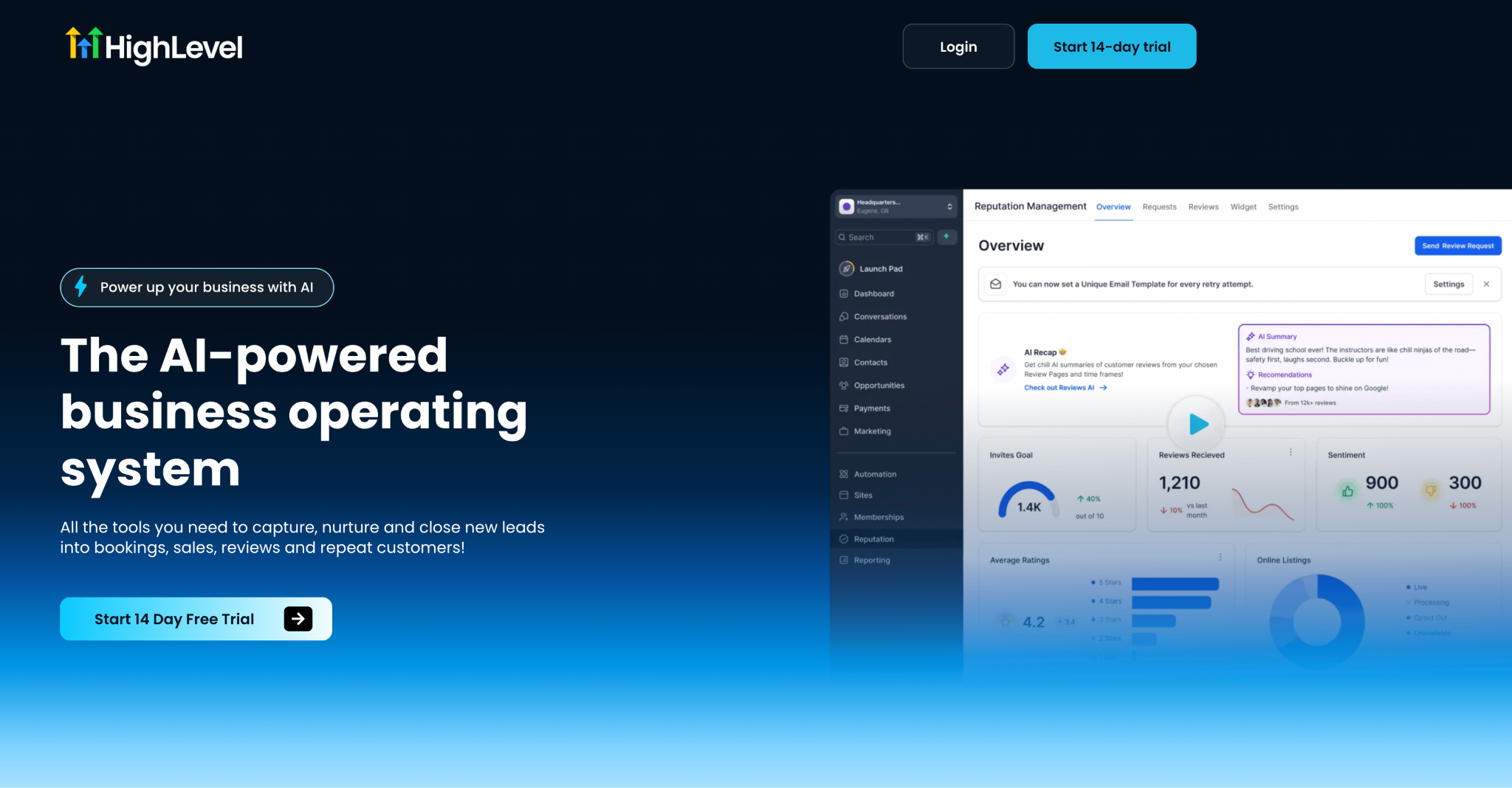
GoHighLevel is an all-in-one platform built for agencies and businesses that want their CRM, funnel builder, email automation, SMS follow-up, and pipeline management under one roof. Its strength is the depth of its integrated stack: you can manage leads, automate follow-up sequences, track pipeline stages, and run campaigns without stitching together multiple tools.
GoHighLevel has emerged as a top-rated sales funnel platform, especially among digital marketing agencies seeking comprehensive client management solutions. It starts at $97 per month and scales from there. You can also try out their 14-day free trial to know if they're worth a shot.
2. ClickFunnels
ClickFunnels is the most widely recognized name in funnel building, and it earned that reputation by making the funnel creation process accessible. Its template library covers virtually every funnel type, and its built-in features for order bumps, one-click upsells, and A/B testing make it effective for entrepreneurs selling products and services online.
As of writing this piece, ClickFunnels offers three pricing plans:
- Launch at $97/month
- Scale at $197/month
- Optimize at $297/month
3. HubSpot
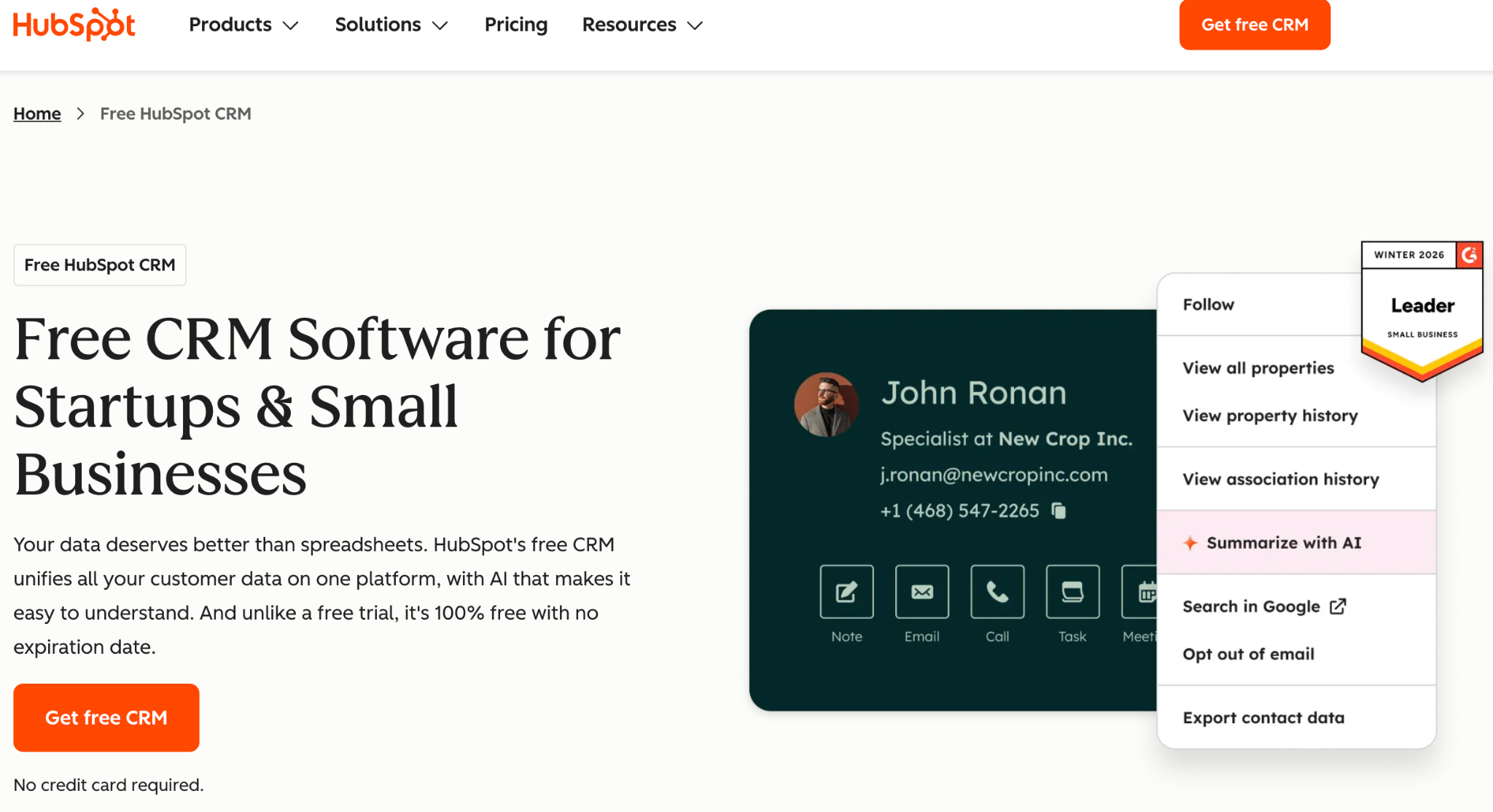
HubSpot is the enterprise-grade option for businesses that need a mature CRM, sophisticated reporting, and full-cycle revenue tracking. Its free CRM tier is useful for businesses just getting started, and the platform's breadth of integrations makes it easy to connect with most other tools in a marketing stack.
4. ActiveCampaign
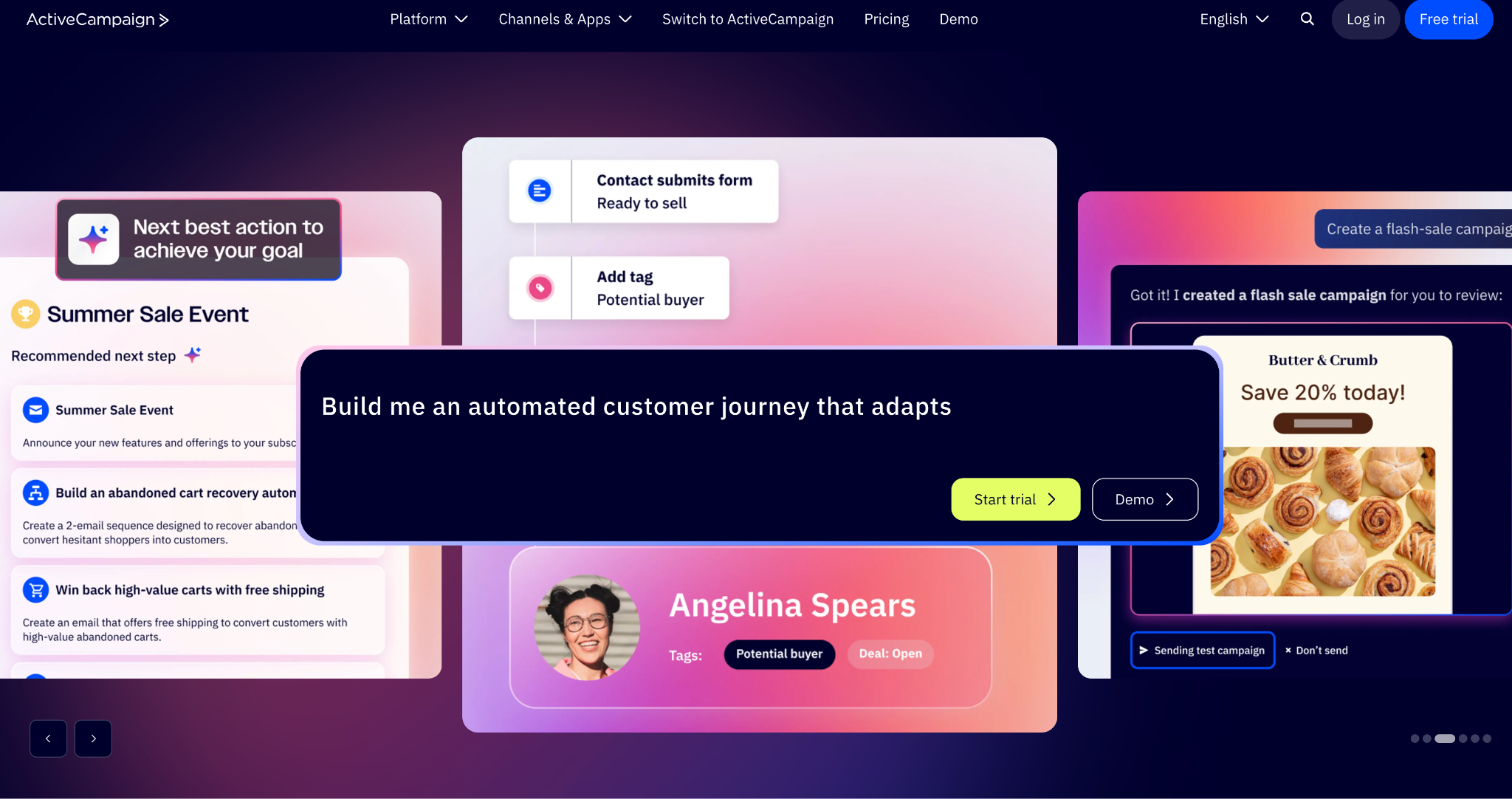
ActiveCampaign is one of the most powerful email marketing and automation platforms available, especially for businesses that need sophisticated behavioral triggers and multi-step customer journey mapping. It integrates with most funnel builders and ecommerce platforms, which makes it a strong choice as the automation layer in a multi-tool stack.
5. Systeme.io
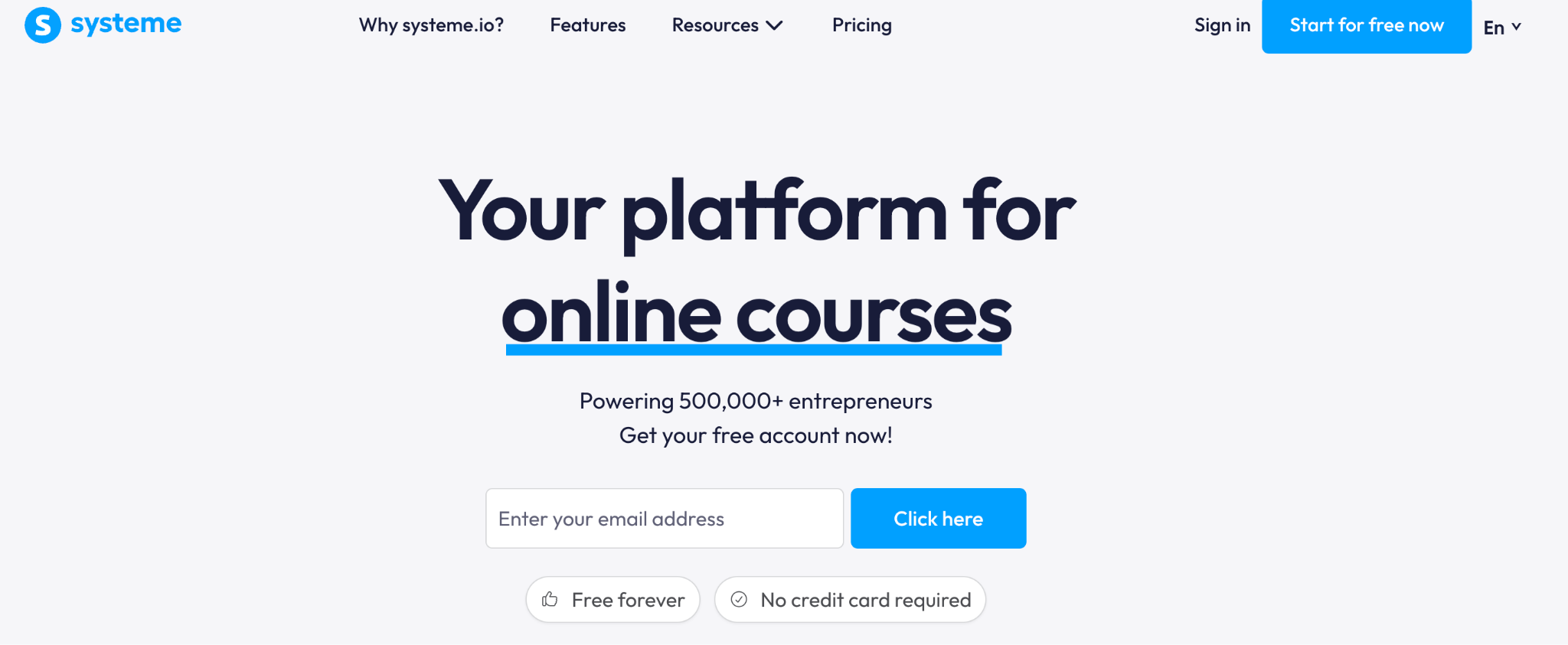
Systeme.io is the most accessible entry point in the category: a free plan that includes funnels, email marketing, automation, and course hosting for up to 2,000 contacts. It lacks the depth of platforms like GoHighLevel or ClickFunnels, but for someone building their first funnel or testing an offer before committing to a paid platform, it covers the essentials at no cost.
Common Sales Funnel Mistakes That Hurt Conversions
These are the patterns I see most often in funnels that aren't performing.
1. Ignoring Funnel Metrics
68% of companies have no formal measurement for funnel performance. If you're not tracking stage-to-stage conversion rates, drop-off points, and cost per acquisition, you're managing your funnel on instinct. Instinct doesn't scale. Set up the measurement first, then make decisions based on the data.
2. Weak Lead Nurturing
79% of leads never convert due to a lack of nurturing. Most businesses generate leads and then either pitch them immediately or let them go cold. Neither works. Effective nurturing is persistent, relevant, and paced to match how your buyer actually makes decisions. That said, build nurture sequences that respect the timeline of your buyer's journey.
3. Poor Alignment Between Sales and Marketing
When marketing optimizes for lead volume, and sales optimizes for deal size, the funnel gets squeezed in the middle. Ensure that there are shared metrics, shared definitions of qualified leads, and regular communication between teams.
4. Overcomplicated Funnel Design
More steps, more pages, and more offers don't always mean better conversion. Complexity creates friction. I've seen simple three-step funnels outperform elaborate ten-step funnels because they respect the buyer's time and make the decision easy. Build the simplest funnel that does the job, measure it, and add complexity only when the data justifies it.
5. Failing to Optimize the Sales Experience
The checkout or conversion experience is often the most neglected part of the funnel. Slow pages, confusing forms, and unclear next steps destroy conversions at the last mile. Sites that load in one second have an ecommerce conversion rate 2.5 times higher than sites that load in five seconds. At the conversion point, focus on speed, clarity, and simplicity to streamline the purchase.
How to Optimize Your Funnel for Maximum Revenue
Here's how to optimize your sales funnel:
1. Identify High-Impact Funnel Bottlenecks
Start by measuring drop-off rates at every stage. The stage with the highest drop-off relative to its potential impact on revenue is your first optimization target. Work on that specifically rather than making broad changes across the whole funnel.
Again, you can use Hotjar's heat maps and session mapping tool to identify where and how users drop off on your landing page.
2. Improve Funnel Performance With Automation
Manual processes don't scale, and they produce inconsistent results. Businesses with automated funnel workflows convert 53% more leads. That said, map every repetitive touchpoint in your funnel, including follow-up emails, lead-scoring updates, CRM stage changes, and abandoned-cart recovery. Then automate them. The time you free up goes toward the high-value conversations and decisions that actually require human attention.
3. Enhance Customer Experience Throughout the Sales Funnel
Every interaction a prospect has with your funnel is an experience that either increases or decreases their confidence in you. Page speed, copy clarity, mobile responsiveness, and response time all contribute to that experience. Look at your funnel from the buyer's perspective, not the builder's perspective, and eliminate anything that creates unnecessary friction or confusion.
4. Create an Effective Sales Funnel Management Strategy
Pull everything together into a documented strategy, including your:
- Target audience
- Funnel stages
- Lead capture and nurture systems
- Conversion metrics
- Testing cadence
- Review schedule.
Only 34% of companies regularly optimize their sales funnel. Being in that group is a competitive advantage.
Conclusion
The businesses that win online aren't the ones with the most traffic. They're the ones with the best-managed funnels. When I look back at what actually drove my results, it wasn't any single tactic. It was the discipline of building a system, measuring what happened within it, and consistently improving it over time.
You don't need a perfect funnel on day one. You need a measured funnel that you improve every week. Start with clear stage definitions, get your tracking in place, and address your biggest drop-off point first. This turns a leaky pipeline into a predictable revenue machine.
If you want to build an online business with stronger economics and a funnel that actually converts, explore what we do at High Ticket.
Frequently Asked Questions About Sales Funnel Management
What are the stages of a sales funnel?
A sales funnel moves through four main stages:
- Awareness is where prospects first discover your business.
- Interest or consideration is where they evaluate your offer against alternatives.
- The decision is whether to commit.
- Purchase is where the conversion happens.
Well-managed funnels also extend beyond the purchase into retention and upsell stages, since existing customers are significantly more likely to buy again than new prospects are to convert for the first time.
How do you optimize a sales funnel?
Start by measuring stage-to-stage conversion rates to identify where the most drop-off occurs. Then address that specific stage with targeted improvements: better copy, cleaner page design, stronger social proof, faster load times, or improved follow-up sequences.
Test changes systematically and measure results before moving to the next bottleneck. The process is iterative and never fully complete, which is why treating optimization as an ongoing practice rather than a one-time fix is so important.
What are the most important sales funnel metrics?
The five metrics that matter most are:
- Stage-to-stage conversion rates
- Customer acquisition cost
- Sales velocity
- Lead-to-customer ratio
- Drop-off rates at each funnel stage.
These numbers tell you where your funnel is performing well, where it's losing money, and what to prioritize in your optimization work.
What is the best sales funnel software?
The best platform depends on your business model and stage. GoHighLevel is the strongest all-in-one option for agencies and businesses that want CRM, automation, and funnel building integrated. ClickFunnels is the most accessible choice for entrepreneurs who want polished funnel templates and built-in conversion tools.
How does marketing automation improve sales funnel management?
Automation removes the inconsistency and manual effort from lead follow-up, nurture sequencing, and pipeline management. It ensures that every lead receives the right message at the right time, regardless of how many leads you're managing simultaneously. The result is better conversion rates, lower acquisition costs, and a sales process that scales without requiring proportional increases in headcount.
How often should you review your sales funnel?
At a minimum, review your core funnel metrics monthly and conduct a full funnel audit quarterly. Weekly check-ins on top-line conversion data help you catch problems early before they become expensive. Companies that optimize their funnels quarterly see 10–30% revenue growth. The review cadence matters less than the commitment to acting on what you find when you look.