

.png)
Furniture is one of the highest-ticket categories in e-commerce. A single sofa order can generate $400–$800 in profit. A home office setup? Potentially more. The problem is that most beginners skip straight to building a store without first solving the most important piece: finding a reliable supplier who will actually ship on time, maintain quality, and protect your margins.
This guide covers the best furniture dropshipping suppliers in the USA, how to evaluate them properly, and how to build a business around them that can actually scale. If you're trying to figure out where to source furniture for your dropshipping store, you're in the right place.
What is Furniture Dropshipping and How Does It Work?
Furniture dropshipping is a retail model where you list and sell furniture online without holding any physical inventory. When a customer places an order on your store, you pass that order to a supplier, who then ships the product directly to the buyer's address.
How the Furniture Dropshipping Model Works
The process looks like this: a customer finds your Shopify store through Google Shopping or a paid ad, orders a sectional sofa for $1,800, you forward the order to your supplier at your wholesale cost of, say, $1,100, and the supplier ships directly to the customer. Your profit on that one transaction, before advertising spend, is $700. This is why furniture is one of the most attractive high-ticket dropshipping niches available. It's not like selling phone cases where you're fighting for $8 margins.
Why Start a Furniture Dropshipping Business in the USA
The U.S. furniture market generates over $200 billion in annual revenue, and it continues to expand as more consumers shift their buying habits online. What used to require showroom visits is now happening from smartphones and laptops.
Today's customers are more comfortable purchasing high-ticket items like beds, dining tables, and office chairs without ever seeing them in person, driven by better product visuals, reviews, and flexible return policies.
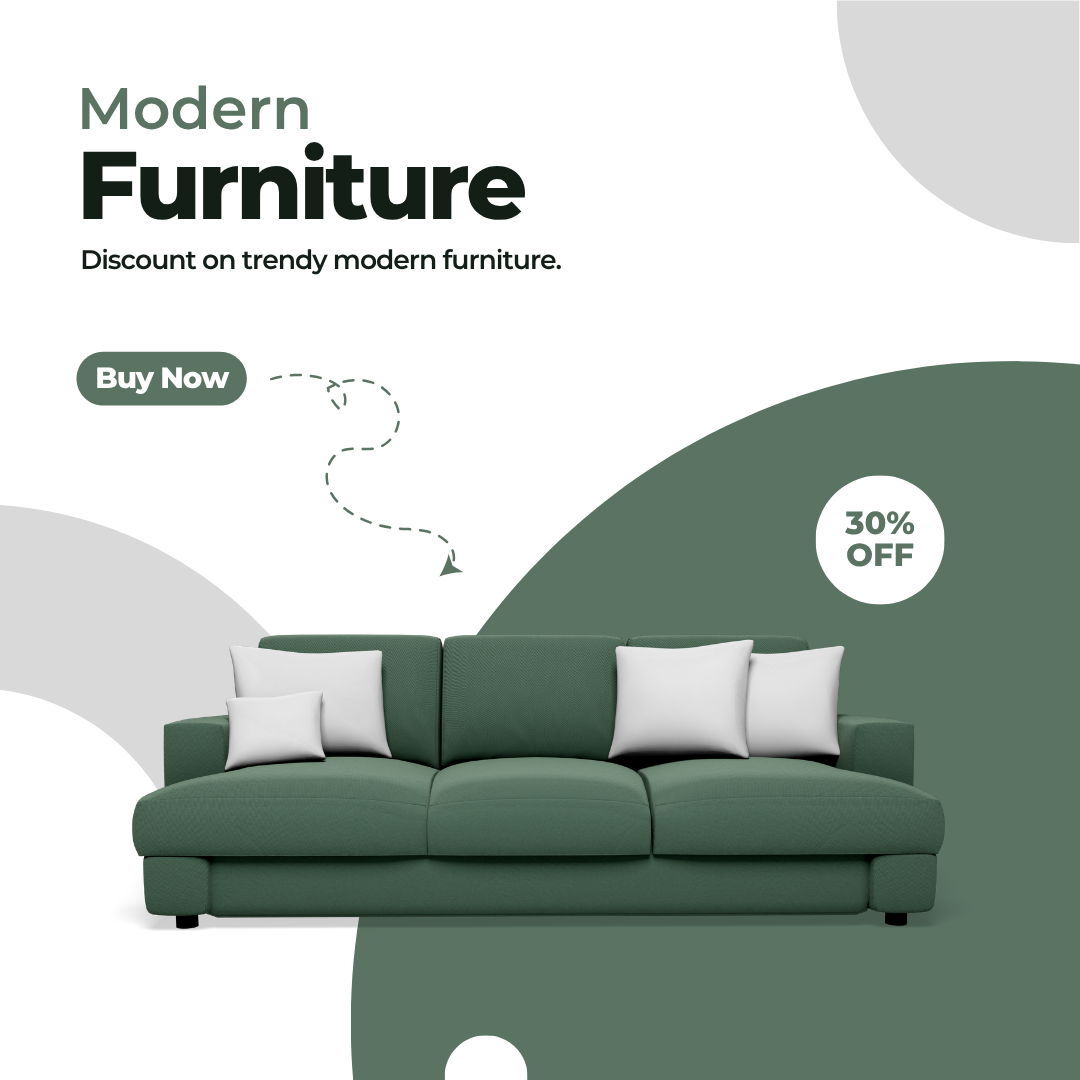
This shift creates a unique opportunity for dropshippers. Unlike saturated low-ticket categories, furniture offers higher order values and healthier margins, making it easier to scale revenue without needing massive sales volume.
Partnering with U.S.-based suppliers gives you an operational edge in this space. Shipping times for large items are faster, typically 5–10 business days domestically compared to 4–8 weeks from overseas manufacturers. In a category where delivery speed heavily influences customer satisfaction, this difference is decisive. A customer who receives a dining table within a week is far more likely to leave a positive review than one who waits two months.
There's also a reliability factor. Furniture is bulky, fragile, and more prone to damage during transit. U.S. suppliers are generally better equipped to handle issues like damaged freight, returns, and replacement requests quickly and professionally. Faster resolutions not only reduce refunds and disputes but also help protect your brand reputation.
Advantages of Furniture Dropshipping
- No inventory or warehouse required. You operate entirely on margin, not capital tied up in stock
- Access to wholesale furniture pricing that gives you room to compete while staying profitable
- Ability to sell high-ticket furniture items, where a handful of orders per week can generate serious revenue
Challenges to Consider
- Shipping costs for bulky items like sofas and dining tables can eat into margins if not built into your pricing correctly
- Supplier reliability and product quality vary significantly — one bad batch of products can tank your reviews
- Lower control over inventory and fulfillment means you're dependent on your supplier's accuracy and communication
How to Choose the Right Furniture Dropshipping Supplier
Not all furniture suppliers are set up for dropshipping. Some only sell wholesale in large quantities. Others support dropshipping but have poor logistics, outdated catalogs, or slow response times. Here's what to look for before committing.
1. Consider product quality and selection of home furnishings:
Furniture is a high-consideration purchase, and customers expect durability, accurate descriptions, and premium finishes. Poor quality leads to costly returns and negative reviews that can damage your brand early.
Whenever possible, request samples or order a unit yourself to inspect build quality, packaging, and delivery experience. At a minimum, prioritize suppliers with proven experience working with other dropshippers or retailers. A wide catalog, spanning bedroom, living room, office, and outdoor furniture, gives you room to test multiple niches and adapt to trends without switching suppliers.
2. Check out the wholesale price and profit margins
Margins in furniture can look attractive on paper, but real profitability depends on your landed cost, that is, the total cost after product price, shipping, platform fees, payment processing, and returns. Aim for a gross margin of 25–40% to give yourself room for advertising and unexpected costs. Mid-range furniture (roughly $800–$3,000) often performs best: it's high enough to generate meaningful profit per sale but still within a price range most online shoppers are comfortable purchasing without seeing in person.
3. Consider Delivery Times
In furniture dropshipping, delivery speed is a major competitive advantage. Customers are far less patient with large purchases than they used to be. Suppliers with U.S.-based warehouses, especially in centrally located states like Ohio, Tennessee, or Texas, can reach most customers within 3–7 business days via ground freight.
This not only improves customer satisfaction but also reduces cancellations and "Where is my order?" support tickets. Faster delivery also positions you closer to Amazon-level expectations, which is the baseline.
4. Minimum order quantities
A true dropshipping supplier allows you to order one unit at a time, only after you've made a sale. If a supplier requires bulk purchases or upfront inventory commitments, you're entering a wholesale model, which entails greater financial risk and storage responsibilities. Make sure you clearly understand the relationship before committing.
5. Business license requirements
Many reputable U.S. furniture suppliers require documentation such as a resale certificate, EIN, or registered business before granting access. While this adds a small barrier to entry, it's actually a positive signal. It means the supplier is selective and likely protects its dealer network. This reduces oversaturation on marketplaces and helps maintain pricing integrity.
6. Dropship agreement and MAP policy
A formal dropshipping agreement outlines expectations around pricing, branding, fulfillment, and support. One of the most important elements to look for is a Minimum Advertised Price (MAP) policy.
MAP ensures that all retailers sell above a certain price floor, preventing aggressive undercutting. Without MAP enforcement, competitors can lower prices, shrink your margins, and turn the business into a race to the bottom.
7. Return and damage policy
Freight shipping damages happen. Understand exactly how your supplier handles claims. Do they replace, refund, or require you to file with the carrier? A supplier with a clear, fair damage policy is worth slightly less margin than one that makes claims difficult to process.
Types of Furniture Suppliers You Can Work With
Here are the main types of wholesale furniture suppliers:
1. Wholesale Furniture Suppliers
These are manufacturers or importers who sell in bulk to retailers. Some offer dropship programs in addition to their wholesale operations. They have better pricing than middlemen, but approval can take longer, and they may require higher sales volumes over time to maintain your account.
2. Dropship Furniture Supplier Platforms
These are aggregator platforms or directories that connect you with multiple furniture suppliers through a single interface. They simplify supplier management but often charge monthly fees and may add a layer between you and the actual vendor, which can slow down issue resolution.
3. Furniture Manufacturers & Direct Partnerships
Going directly to a manufacturer gives you the best margins and the most control. You can negotiate custom branding, exclusive SKUs, or favorable shipping terms. The trade-off is that manufacturer outreach takes time, requires persistence, and often involves more onboarding paperwork. But once established, these relationships are hard for competitors to replicate.
Top 10 Furniture Dropshipping Suppliers USA (Best Picks)
This section breaks down the best options available for sourcing furniture products in the USA. The right choice depends on your business model, niche, and how seriously you're approaching supplier quality. Read each one carefully before deciding where to start.
🥇 1. SupplierHQ (Best Furniture Dropshipping Supplier Overall)
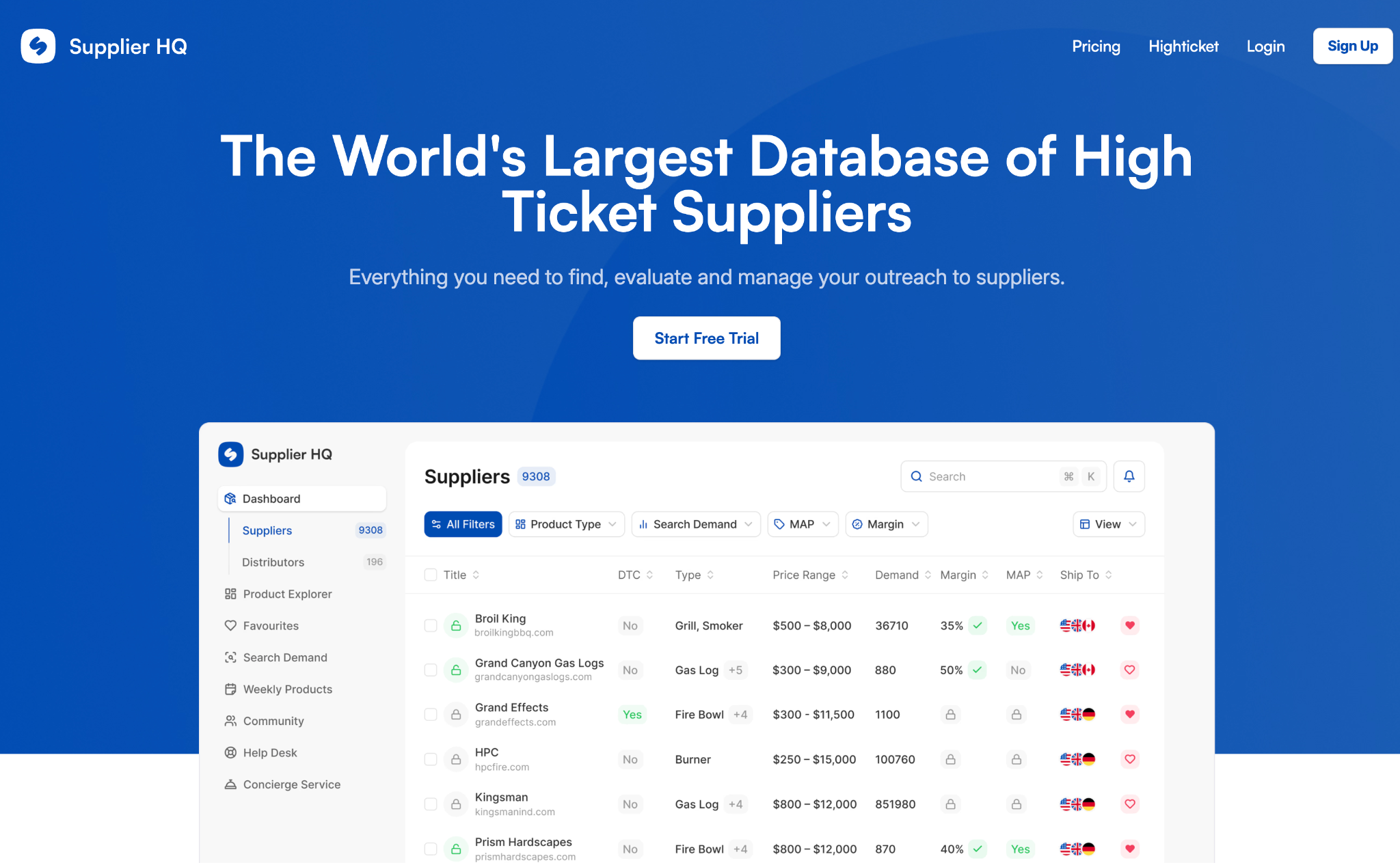
SupplierHQ is the most comprehensive tool available for high-ticket dropshippers looking to source furniture from verified US-based suppliers. Unlike other suppliers in this guide, it's not a marketplace or a fulfillment platform. Instead, it's a research and supplier acquisition system built specifically for this business model.
The SupplierHQ platform gives you access to over 9,000 vetted suppliers and 100+ high-ticket distributors across dozens of niches, with furniture among the most well-represented categories. Every supplier in the database has been triple-checked by a dedicated research team before being added. That matters because it filters out unresponsive vendors, poor-quality manufacturers, and suppliers who aren't actually set up for dropshipping.
What separates SupplierHQ from a basic supplier directory is the depth of information available for each listing. You can see the supplier's MAP (Minimum Advertised Price) policy, average profit margins, dropshipping locations, shipping coverage, and contact details all in one place. You're not guessing whether a supplier is worth reaching out to — you already know before you spend any time on outreach.
Beyond the supplier database, SupplierHQ provides three core tools that directly support the process of finding, validating, and landing furniture suppliers.
- Product Explorer
This is where you start if you haven't fully committed to a furniture sub-niche yet or want to validate demand before sourcing. Product Explorer lets you browse high-ticket product categories and drill down to specific items with full demand data attached.
For furniture specifically, you can search the living room, home office, bedroom, or outdoor categories to pull up a ranked list of trending products with their average prices. Each product listing shows seasonality patterns, a 5-year popularity trend, and the typical price range that buyers pay. This tells you immediately whether a product has consistent year-round demand, spikes seasonally (like outdoor patio sets in spring), or is declining.
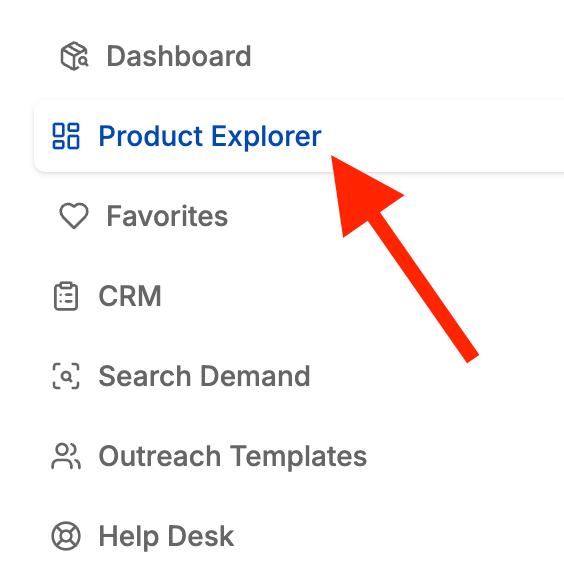
To use it, go to your SupplierHQ dashboard and click "Product Explorer" in the menu. From the category page, select the furniture sub-niche you're evaluating. The platform returns a list of the top-trending products in that category, with their average prices surfaced immediately so that you can make a data-backed niche decision in minutes rather than hours of manual research.
- Search Demand
Once you've identified a product you're interested in, the Search Demand tool tells you how many people are actively looking for it. This is critical for furniture dropshipping because some categories appear profitable on paper but lack sufficient organic search volume to sustain an SEO-driven store.
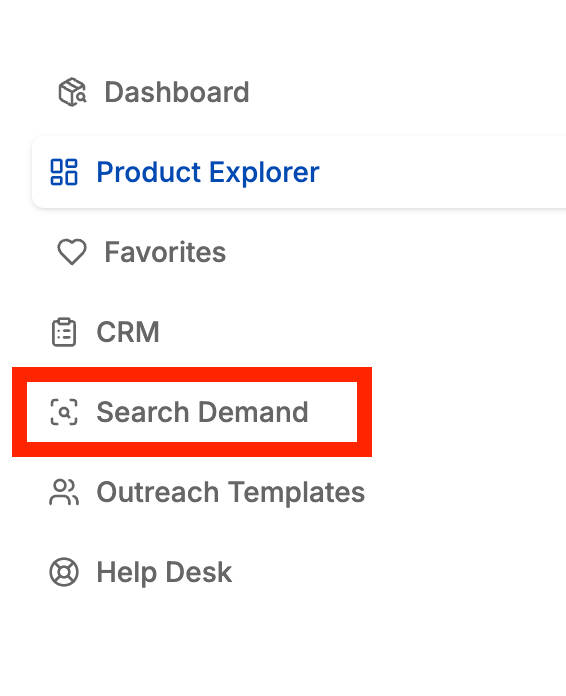
Search Demand pulls local and global search volume, shows the seasonality of that demand over time, tracks interest trends, and displays the cost per click for paid advertising, so you can estimate your likely advertising costs before you commit to a product.
To access it, click "Search Demand" in the dashboard menu, type your product into the search field, and select your target location. For US-focused furniture stores, running this for terms like "sectional sofa," "home office desk," or "outdoor dining set" gives you a clear picture of actual buyer intent, not just assumptions.

- Supplier Management CRM
Most dropshippers manage supplier outreach through a spreadsheet, which gets messy fast. SupplierHQ includes a built-in CRM that centralizes your entire supplier pipeline, from first contact through to a signed partnership.
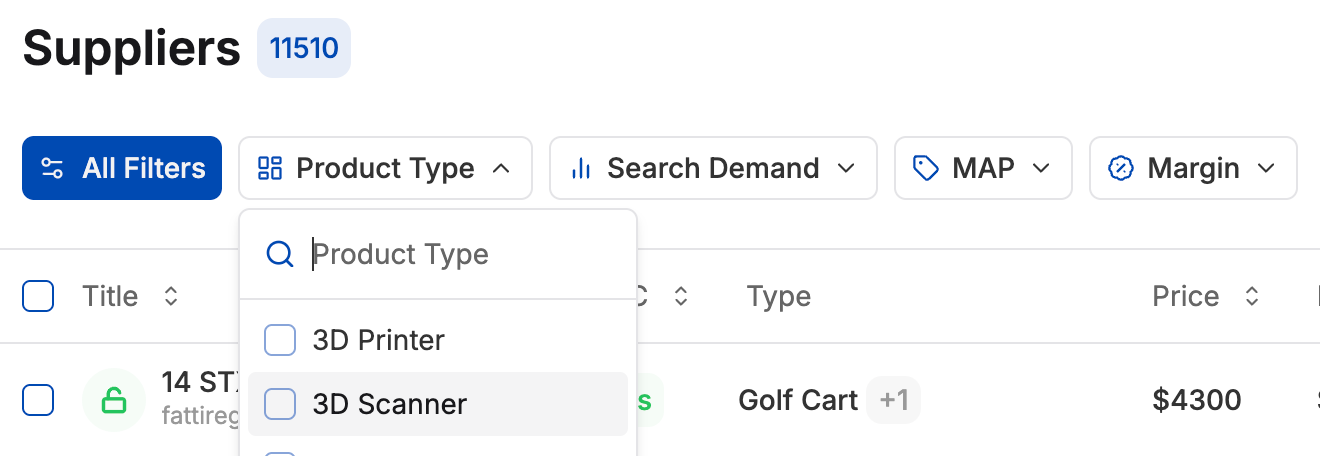
When you find a supplier you want to pursue, click the Favorites icon to add them to your Supplier list. From there, you update their status as the relationship progresses: "Reached Out, In Discussion, Signed Up." You can also organize suppliers into folders by product type, niche, or priority, which is especially useful when you're managing outreach across multiple furniture categories simultaneously.
The platform also provides ready-to-use outreach templates written specifically for high-ticket supplier conversations. These save you from writing cold emails from scratch and give you a professional, proven starting point that suppliers actually respond to.
The combination of verified supplier data, demand validation, and pipeline management in a single tool means SupplierHQ covers the entire pre-launch research phase for a furniture dropshipping business — without requiring any store integration.
Pros
- All 9,000+ suppliers are manually vetted before being listed
- Product Explorer shows trending furniture products with price points, seasonality, and 5-year demand trends in one view
- Search Demand tool validates product viability with real search volume, trend data, and CPC before you commit
- Built-in supplier CRM with outreach templates keeps your pipeline organized and professional
- Access to distributor data alongside individual suppliers — useful for scaling into multiple furniture lines
- Works independently of your store; no integration required, access it from anywhere at any time
- Covers the entire supplier sourcing process from discovery to signed partnership
Cons
- Built specifically for high-ticket niches
- Some advanced data and features are gated behind higher-tier plans
2. Wayfair Professional / Partner Program
Wayfair's B2B program is designed for interior designers, property managers, and business buyers who need to purchase furniture in quantity at reduced rates. It's primarily a retailer, not a manufacturer or wholesale distributor. That said, some operators use Wayfair's platform either as a sourcing reference or as a sales channel by becoming a Wayfair partner seller.
If you're considering selling on Wayfair as a marketplace (rather than sourcing from them), their partner program allows approved sellers to list products on their platform and tap into their existing buyer traffic. Approval requires an application, product catalog submission, and compliance with their content and shipping standards.
Pros
- One of the largest furniture and home goods catalogs available online
- Good for competitive research and market pricing reference
- Partner sellers benefit from Wayfair's established buyer traffic without building their own audience from scratch
- Domestic fulfillment infrastructure supports fast delivery expectations across most of the continental US
- Recognized brand name that gives shoppers confidence, particularly for large purchases
Cons
- Not a true wholesale dropship supplier
- Margins available through the professional program are thin without significant purchase volume
- Selling Wayfair-stocked products on your own independent store risks direct price competition, since buyers can search for the same items and find them cheaper on Wayfair's site
- Wayfair's partner seller program has stringent performance metrics, and getting and staying approved requires consistent compliance with its operational standards
- Less control over pricing, positioning, and customer relationships than running your own branded store
3. AutoDS

AutoDS is a dropshipping automation platform that connects to multiple supplier sources, including Amazon, Walmart, AliExpress, and select wholesale partners, and automates the operational layer of running a store. For furniture sellers, it handles product imports, inventory syncing, order forwarding, and tracking updates across your connected sales channels.
The platform is best understood as an operational tool rather than a source of suppliers. It doesn't give you exclusive supplier relationships or vetted high-ticket partners. Instead, AutoDS automates the workflow once you have identified products and sources.
Pros
- Automates order processing, price monitoring, and inventory updates across multiple suppliers in one dashboard
- One-click product import pulls product details, images, and specs directly into your Shopify or eBay store
- Tracks price changes at the supplier level and automatically updates your listings to protect margins
- Supports a wide range of source platforms, making it flexible for sellers working with multiple furniture vendors
- Useful for beginners who want to reduce manual fulfillment work while they learn the business
Cons
- Cost compounds quickly as your store grows
- Sourcing routes through marketplaces like Amazon and Walmart rather than direct manufacturer relationships, which limits margins and makes your supply chain more fragile
- Not designed for building a branded, premium furniture store
- Relies on third-party marketplace pricing and availability, which means stock and price stability are not guaranteed
4. Overstock (Beyond.com)
Overstock (now operating primarily under the Beyond.com brand) has been one of the larger online furniture retailers in the US. Their marketplace model allows third-party sellers to list and sell through their platform, similar to how Amazon and Wayfair operate for partner sellers. Their catalog includes a broad range of furniture categories from budget to mid-tier pricing.
For dropshippers, Overstock's value lies primarily in using it as a sales channel (listing your products there to reach its buyer traffic) rather than as a sourcing partner. Their buyer base skews toward deal-oriented shoppers, which affects pricing expectations and margins.
Pros
- Established platform with a built-in audience of furniture buyers, reducing your cold traffic acquisition burden
- Wide product category coverage, including bedroom, living room, dining, and outdoor furniture
- US-based fulfillment infrastructure that supports reasonable domestic delivery timelines
- Brand trust from years of consumer-facing retail can improve conversion on high-ticket listings
Cons
- The platform has undergone significant changes following its acquisition and rebranding; partner program terms require direct verification as of 2025
- Margin room varies substantially depending on the product category and competition level on the platform
- Listing on Beyond.com means competing directly with other sellers on the same platform based on price, which pressures margins
- Less autonomy over branding, customer communication, and store presentation compared to owning your own Shopify store
5. Ashley Furniture
Ashley Furniture is one of the largest furniture manufacturers and retailers in the United States, with a product range spanning bedroom sets, sofas, dining furniture, and home office pieces across a wide price range. They operate through their own retail stores, their website, and an approved dealer network that, in some cases, includes drop-shipment arrangements for authorized partners.
Getting access to Ashley's wholesale or dropship program requires an application, business credentials, and in some regions, a demonstrable retail presence or sales history. But for operators who can secure approval, Ashley's brand recognition translates directly into buyer confidence and lower acquisition costs, since customers are already familiar with the product line.
Pros
- High brand recognition among US furniture buyers — Ashley products often convert better than no-name alternatives at the same price point
- An extensive catalog across price tiers, which allows you to serve different buyer segments without switching suppliers
- US manufacturing and regional distribution centers support competitive domestic shipping timelines
- MAP policy enforcement means you're protected from other authorized dealers racing you to the bottom on price
Cons
- The dealer approval process is selective, time-consuming, and not guaranteed
- Ashley products are listed through many retailers and their own website, meaning buyers can easily price-compare and potentially find it cheaper elsewhere
- MAP is strictly enforced, so discounting as a competitive lever is largely off the table
- Not a plug-and-play dropship program; the operational setup requires direct communication and agreement with regional representatives
6. AliExpress
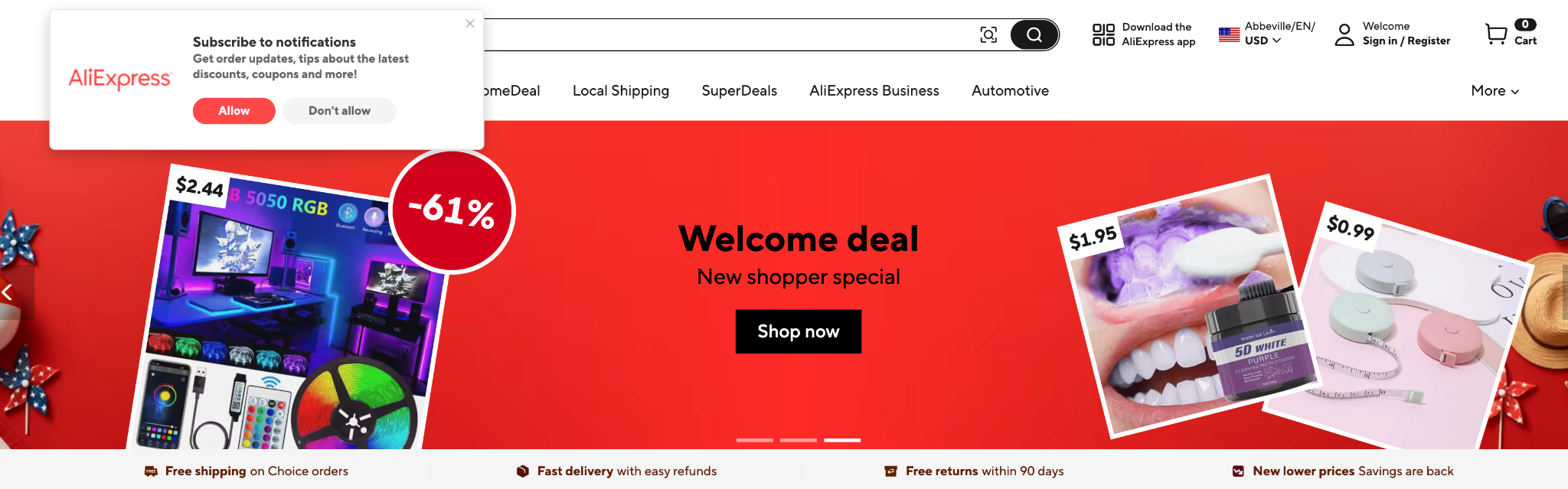
AliExpress is a global B2C and B2B marketplace operated by Alibaba, offering furniture products from Chinese manufacturers at significantly lower wholesale prices than domestic US suppliers. Beginner dropshippers widely use it because of its low barrier to entry: no application, no minimum order, and instant access to thousands of furniture SKUs.
Pros
- Very low product costs create room for high percentage markups, even if gross dollar margins per sale are moderate
- An enormous variety of furniture styles, materials, and price points. You can find almost any type of furniture available
- Zero approval process makes it accessible for complete beginners to test products before committing to supplier relationships
- Platforms like AutoDS and DSers integrate with AliExpress for automated order processing
Cons
- Shipping times from China to the US typically run 2–6 weeks for standard shipping
- Product quality is highly variable across different AliExpress sellers, and you often cannot verify quality without ordering samples or waiting for customer feedback
- Damaged freight claims and returns are more difficult to resolve internationally than with domestic suppliers
- Furniture buyers are sensitive to delivery timelines, and long waits create a disproportionate number of refund requests and chargebacks
- Building a premium or high-ticket furniture brand on AliExpress sourcing is very difficult
7. Costway
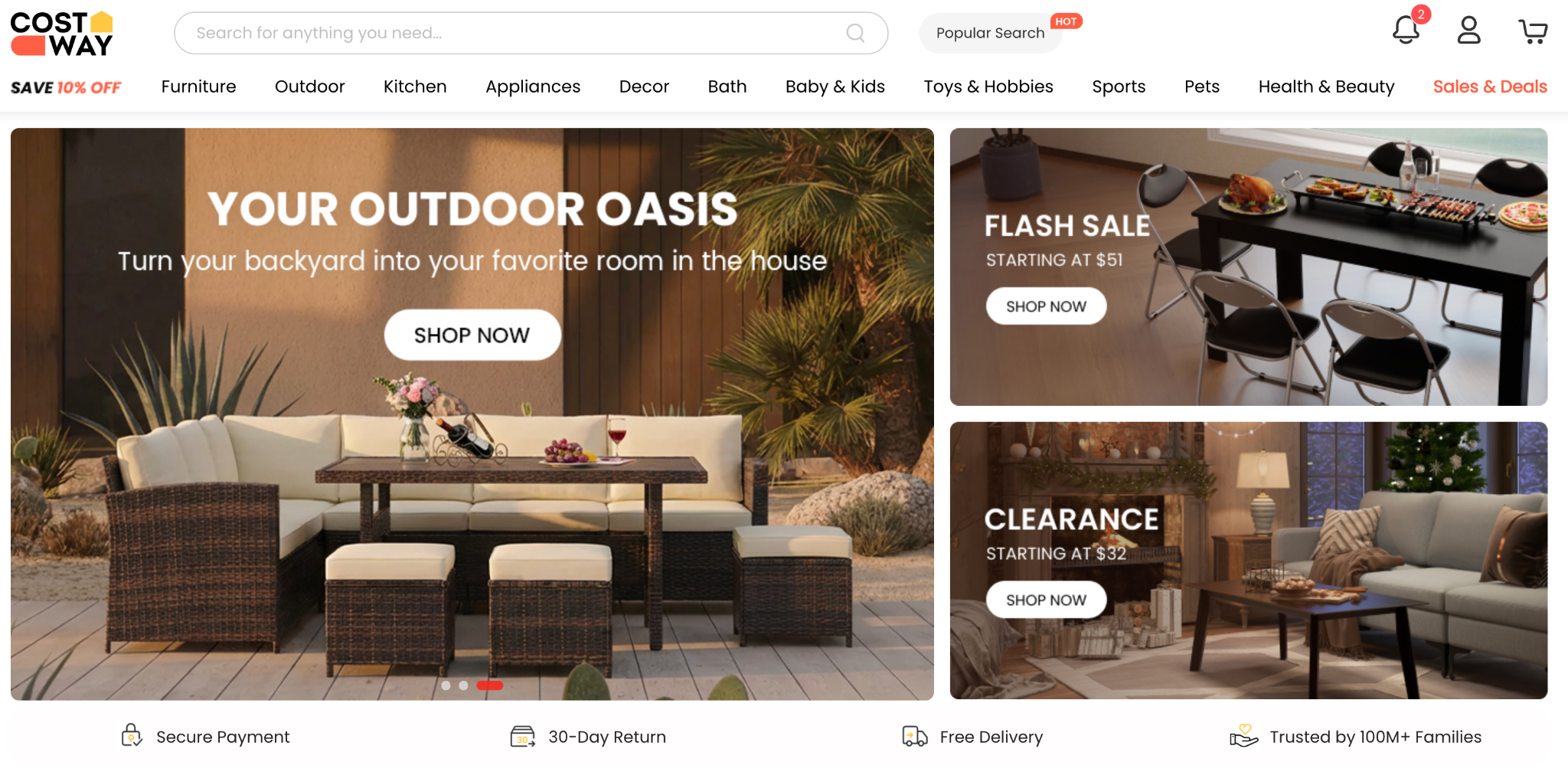
Costway is a US-market furniture and home goods brand that manufactures products primarily in China and warehouses them domestically. They sell through their own website and across major marketplaces, including Amazon, Walmart, and Wayfair.
The main appeal of Costway is that, despite manufacturing offshore, their US warehousing means buyers receive domestic shipping speeds. Their catalog covers outdoor furniture, home office pieces, bedroom basics, and living room items at competitive mid-tier price points.
Pros
- US warehouse locations provide 5–10 day domestic shipping on most items
- A broad catalog across multiple furniture categories, making it possible to run a diverse store from a single supplier relationship
- Mid-tier price points ($200–$800 for most items) create accessible entry points for buyers while still allowing reasonable markup margins
- Direct-to-consumer brand presence means customers can often find reviews and product context that build purchase confidence
Cons
- Costway products are already widely listed across Amazon, Walmart, and Wayfair, which means buyers can easily comparison-shop and undercut your pricing
- Product quality is generally acceptable for mid-tier positioning, but does not support premium brand storytelling or luxury furniture positioning
- Because they sell direct-to-consumer, you're always competing with Costway's own pricing, which makes margin management more complex
How to Start a Furniture Dropshipping Business (Step-by-Step)
Step 1: Choose a Profitable Furniture Niche
Don't try to sell all the furniture. Pick a sub-niche where you can build authority and reduce competition. Home office furniture, outdoor patio sets, luxury bedroom collections, and ergonomic seating are all defensible niches with strong search demand.
Use a tool like SupplierHQ's Product Explorer to evaluate search volume, seasonality, and average price points before committing.
Step 2: Find Reliable Dropshipping Suppliers in the USA
Start with SupplierHQ to identify vetted suppliers in your niche. Reach out to at least 5–10 suppliers, not just one. Your goal is to secure 2–3 relationships, so you have backup options if a primary supplier goes out of stock or has a quality issue. Use their outreach templates to start conversations efficiently, and track responses in the built-in CRM.
Step 3: Set Up Your Ecommerce Store
Shopify is the industry standard for dropshipping stores. Build your store around a specific niche and position it as a specialist destination — "modern home office furniture" converts better than "we sell all furniture." Use professional photos from your supplier, write original product descriptions, and ensure your shipping, return, and contact information are clearly visible.
Step 4: Pricing Strategy for Profit
Your pricing needs to cover your cost of goods, platform fees (typically 2.9% + $0.30 on Shopify Payments), and advertising costs, while leaving you with a healthy margin. For furniture in the $800–$2,500 range, a 30–40% gross margin is a reasonable target. Be careful not to race to the bottom on price — furniture buyers are often more concerned with quality signals and delivery reliability than with saving $50.
Step 5: Marketing Your Furniture Store
Some marketing strategies that work are:
- SEO
Long-tail keywords like "modern farmhouse dining table with bench" or "ergonomic home office chair under $500" have high search volume and buyer intent. Create detailed product pages with structured content, and consider building category pages and buying guides that target these terms organically.
- Paid Ads (Google & Facebook)
Google Shopping is one of the highest-performing channels for furniture dropshipping because it captures buyers who are already in purchase mode. Facebook and Instagram ads work well for building awareness and retargeting visitors who didn't convert on their first visit. Start with Google Shopping, dial in your ROAS, then expand to social.
- Social Media & Influencer Marketing
Interior design is a highly visual niche. Pinterest drives significant furniture traffic, and Instagram accounts focused on home decor can move product fast. Partner with micro-influencers in the home decor space, as they often have more engaged audiences than large accounts and charge far less per post.
Common Mistakes to Avoid in Furniture Dropshipping
Some of the mistakes to avoid when you start your furniture dropshipping business are:
1. Choosing the Wrong Supplier
The most common early mistake is choosing the first supplier you find without properly vetting them. Request product specs, confirm they actually hold the inventory they list, and ask explicitly how they handle damaged freight. A supplier who can't answer that question clearly is a liability.
2. Ignoring Shipping Costs and Delivery Times
Furniture shipping is expensive. White-glove delivery services that bring items inside and assemble them can add $150–$300 to a single order. Know whether your supplier offers this, what it costs, and whether it's included in your wholesale price. Surprise freight costs at checkout kill conversions.
3. Selling Low-Quality Furniture Products
Furniture is a high-involvement purchase. Buyers research, compare, and read reviews carefully. If you're sourcing low-quality products to hit a lower price point, returns and negative reviews will accumulate quickly. In furniture, positioning around quality and reliability beats competing on price every time.
4. Poor Customer Service and Returns Handling
A damaged sofa is not a minor issue. The customer is frustrated, the item is bulky, and returning it is logistically complicated. Have a clear process in place before it happens: who files the freight claim, does the supplier send a replacement directly, and what's the timeline? Customers whose problems are resolved quickly and professionally often become repeat buyers. Customers who don't leave detailed one-star reviews.
Tips to Scale Your Furniture Dropshipping Business
1. Build Relationships With Suppliers
The best supplier relationships aren't transactional. Check in regularly, share your sales volume, and ask for exclusive SKUs or better pricing as you grow. Suppliers prefer to work with consistent, growing partners. Being that partner gives you leverage that casual buyers don't have.
2. Expand Your Furniture Product Range
Once you have a profitable core niche, add adjacent categories. If you're selling home office desks, add ergonomic chairs, monitor arms, and storage solutions. This increases average order value and gives buyers a reason to stay on your site rather than shopping around.
3. Improve Customer Satisfaction and Reviews
Proactively follow up after delivery. A simple email asking if the item arrived in good condition and requesting a review costs you nothing and builds social proof that converts future buyers. Positive reviews on Google and your store are compounding assets.
4. Optimize Your Ecommerce Store for Conversions
A furniture buyer needs to feel confident before spending $1,500 online. That means high-quality photos from multiple angles, clear dimensions, a visible return policy, trust badges, and, ideally, a phone number or chat option. Use heat maps on your product pages to see where buyers are dropping off and fix those friction points.
Final Thoughts:
Furniture dropshipping is not a passive income scheme. It's a real business that rewards people who take supplier vetting seriously, build genuine operational systems, and focus on customer experience. The margin potential is there. The demand is real. The question is whether you're going to build it on a solid foundation.
Start by identifying your niche, then use a tool like SupplierHQ to find and vet domestic suppliers who can actually deliver. Get two or three supplier relationships in place before you launch. Build a store that looks and feels trustworthy. Then focus your energy on traffic and conversion optimization.
If you want to go deeper on the operational side, that is, how to structure supplier outreach, how to price high-ticket products, and how to build a store that converts, explore the free resources and training available through my website, HighTicket.io.
Frequently Asked Questions
What Is the Best Furniture Dropshipping Supplier in the USA?
For building a high-ticket furniture dropshipping business, SupplierHQ is the strongest starting point because it gives you access to vetted domestic suppliers with verified margin data, rather than sending you to unvetted directories or overseas platforms with slow shipping.
Do I Need a Business License for Wholesale Suppliers?
Most legitimate US furniture suppliers will require, at a minimum, a resale certificate (to avoid paying sales tax on wholesale purchases) and an EIN. Some require a physical business address or an established website before approving you. This is standard practice and worth setting up properly before you start outreach.
How Profitable Is Furniture Dropshipping?
When done right, furniture dropshipping can yield 25–40% gross margins on items selling for $800–$3,000. The key variables are supplier pricing, advertising efficiency, and how well you handle returns and damage claims.
Can I Dropship High-Ticket Furniture Successfully?
Yes, and high-ticket is actually where the model works best. A $2,000 sofa with $600 in profit requires the same operational work as a $40 item that makes $8. The conversion rate is lower on expensive items, but the economics per order are dramatically better. Focus on buyer trust, quality suppliers, clear shipping policies, and high-ticket furniture is very viable.