

.png)
Picking the wrong supplier is one of the fastest ways to kill a home decor dropshipping store. Late shipments, inconsistent product quality, and thin catalogs compound quickly — returns pile up, reviews turn negative, and recovering lost customer trust costs far more than the margin you saved by cutting corners on sourcing.
The good news: the home decor market is large and still growing, which means there is real money to be made if you build on a reliable fulfillment foundation. This guide covers the seven best home decor dropshipping suppliers for 2025, evaluated across catalog depth, shipping speed, platform compatibility, pricing transparency, branding options, and supplier quality. Whether you are launching a new store or replacing an underperformer, use it to shortcut your research and make a sourcing decision with confidence.
What Separates a Good Home Decor Supplier From a Bad One
Not all dropshipping suppliers are built the same, and the gaps show up in the metrics that actually affect your business: delivery time complaints, return rates, and whether your margins survive the first few months of paid traffic.
Before committing to any platform, evaluate suppliers against these six criteria:
- Catalog depth and variety — Does the platform cover the product types your store needs, from wall art and textiles to lighting and accent furniture?
- Shipping speed and geographic reach — Can the supplier consistently deliver within your customers' expectations, particularly if you are targeting US or European buyers?
- Platform integration — Does the supplier connect directly to your ecommerce stack, and how reliable is automated order sync and inventory updating in practice?
- Pricing transparency — Are product costs and fees clear upfront, or do margin-eating surprises appear after you have already committed?
- Branding and white-label options — Can you present a consistent customer-facing identity, or will your supplier relationship be visible in every shipment?
- Support quality — When something goes wrong, is there a team that responds and resolves issues, or are you on your own?
The seven suppliers below each solve a different part of this equation. The right choice depends on your store's current stage, your target customer's location, and where your biggest operational friction sits right now.
At a Glance: Top Home Decor Dropshipping Suppliers Compared
The 7 Best Home Decor Dropshipping Suppliers
Here are the top 7 home decor dropshipping suppliers in 2026:
1. SupplierHQ — Best Overall for High-Ticket Home Decor
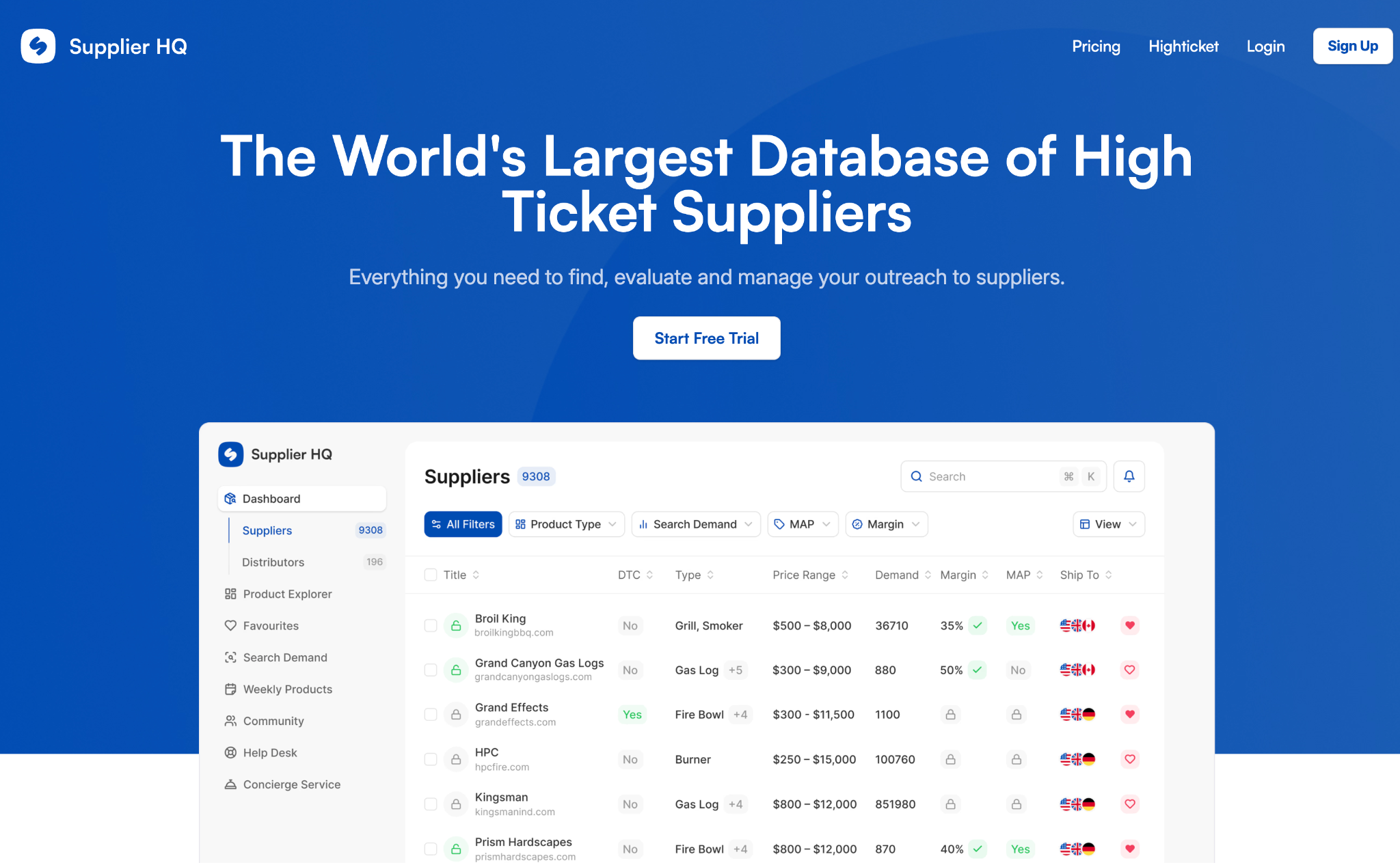
SupplierHQ is an all-in-one high-ticket supplier database built specifically for dropshippers looking to move beyond low-margin products. The platform contains over 9,000 verified high-ticket suppliers and 100+ high-ticket distributors, all independently vetted by SupplierHQ's research team before going live.
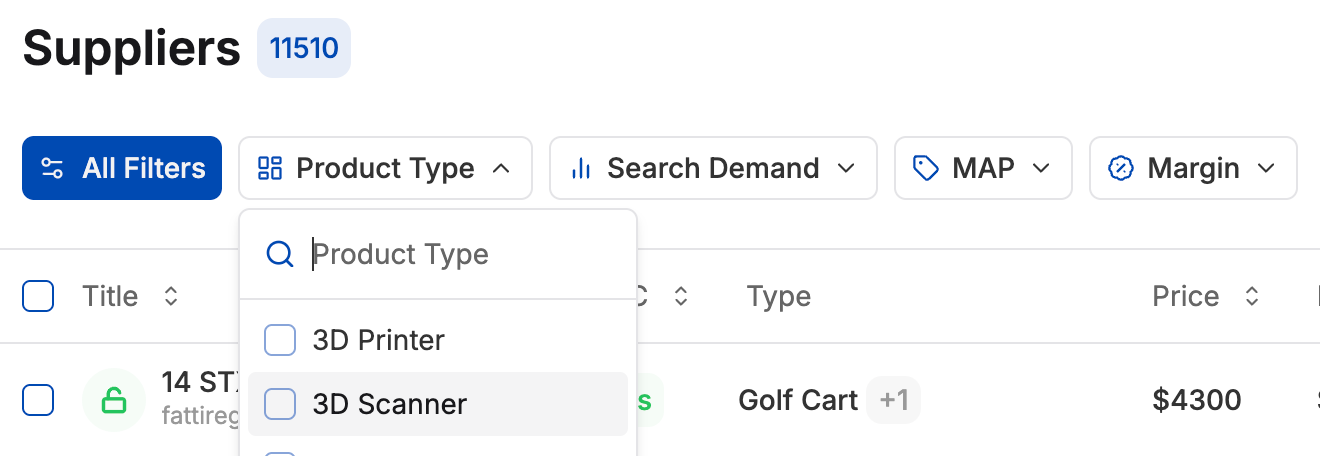
You can filter by price range, search demand, location, profit margin, and product type — which means you are working with a targeted list from the start, not scrolling through thousands of irrelevant results.
For home decor specifically, the combination of US-based suppliers with fast shipping and the platform's built-in product research tools makes it one of the most practical sourcing options for sellers targeting higher-priced product categories. Most home decor dropshipping guides focus on volume-play platforms. SupplierHQ is built for a different operator: one who would rather sell fewer units at better margins than race to the bottom on price.
Here is a breakdown of SupplierHQ's core features and why they matter for home decor dropshipping.
- Product Explorer
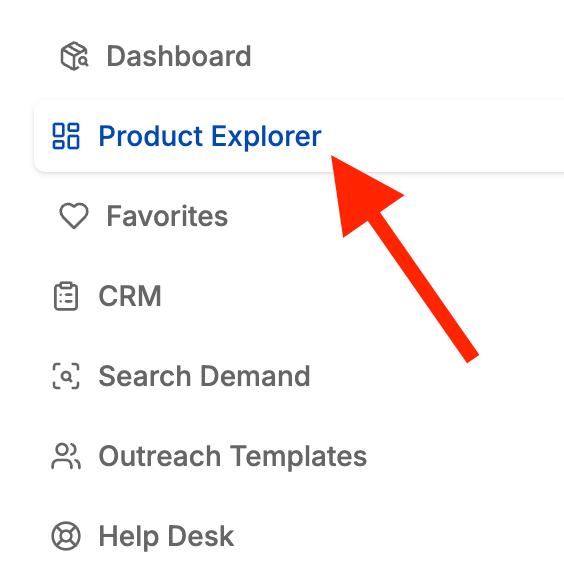
This is where product research starts. Product Explorer surfaces trending high-ticket products with the data you need to make a sourcing decision: seasonality curves, five-year popularity trends, and average price points for each product category. If you are trying to identify what to sell before building a catalog, this feature removes a significant amount of guesswork from the process.
Navigate to the dashboard, click Product Explorer, and select your product category. You will see a list of the top trending products in that niche, each with its average price point displayed alongside trend data. The same page surfaces the top suppliers for each product, including their price range, profit margin, MAP (Minimum Advertised Price), and shipping location — all on a single screen.
- Search Demand
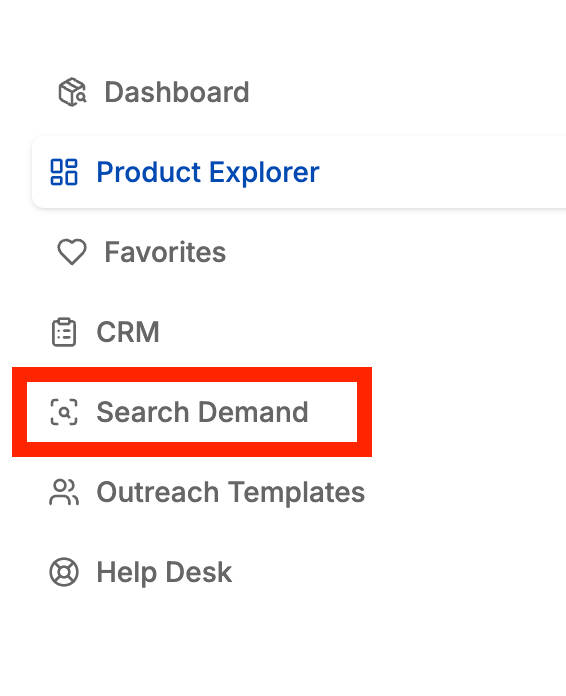
Search Demand lets you validate whether a product has real, consistent buyer intent behind it, not just a short-lived social media moment. Enter a product name and target location, and the tool returns local and global search volume, seasonality patterns, trends over time, and cost-per-click data. This tells you whether interest in a product is growing, plateauing, or fading — before you commit inventory or ad spend to it.

- Supplier Management CRM
SupplierHQ includes a built-in CRM for managing supplier outreach. When you identify a supplier you want to work with, you add them to your list and track the relationship from first contact through to a signed partnership. The platform also provides outreach templates used by high-ticket dropshippers to initiate supplier conversations — useful if cold supplier outreach is new territory for you.
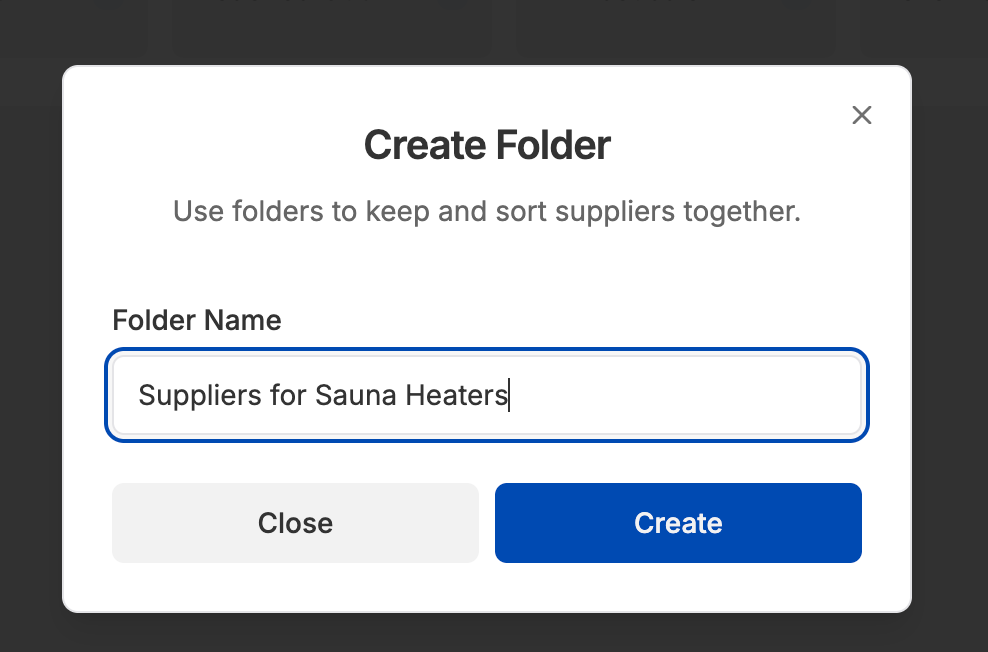
You can create folders to segment suppliers by product type, price tier, or any other criteria that fit your business. That level of organization becomes genuinely important when you are managing multiple niche stores or testing several product categories simultaneously.
- Distributor Access
Beyond individual suppliers, SupplierHQ includes a dedicated distributor database. New dropshippers often overlook distributors, but they can be a faster path to accessing multiple brands through a single relationship. Distributor listings include address, phone, website, email, and the brands they carry — everything needed to initiate contact without additional research.
Pros
- Over 9,000 verified high-ticket suppliers and 100+ distributors, with research team validation on every listing
- Filter by price, search demand, profit margin, MAP, and shipping location
- Product Explorer with five-year trend data, seasonality, and top supplier matches on the same page
- Search Demand feature validates product interest with real search volume and CPC data
- Built-in supplier outreach CRM with contact tracking and pre-built outreach templates
- No store integration required
- US-based and fast-shipping suppliers available across most major high-ticket home decor niches
Cons
- Advanced features and full database access require a paid subscription
- Focused on high-ticket products
2. Spocket — Best for Fast US and EU Fulfillment

Spocket is built around one core problem: closing the gap between order placement and doorstep delivery. Most of its suppliers are based in the United States and Europe, which makes the 2- to 7-day delivery window realistic rather than aspirational. For home decor stores where customer expectations around shipping speed are high, geographic concentration is a meaningful operational advantage.
The catalog covers wall art, candles, textiles, and accent furniture, giving store owners a reasonable range without having to patch together multiple platforms. Branded invoicing is included on mid-tier plans, which helps you maintain a consistent customer-facing identity rather than exposing the supplier relationship at the point of delivery. Product pages import to Shopify and WooCommerce with descriptions and imagery included, though most sellers will want to rewrite the copy to match their store's tone and positioning.
Spocket works best for stores where shipping time is a genuine competitive differentiator and where customers are willing to pay a modest premium for reliable, fast fulfillment. It is not the right platform if your strategy depends on competing primarily on price.
Pros
- Supplier network concentrated in the US and Europe for genuine 2–7 day delivery
- Branded invoicing available on mid-tier plans
- Direct Shopify and WooCommerce integration
- Consistent catalog range across core home decor categories
Cons
- Subscription tiers are priced higher than several alternatives
- Product costs run above what Asian supplier networks offer, compressing margins at lower price points
- Not suited to fully hands-off operation — catalog curation and pricing updates require regular manual attention
3. CJDropshipping — Best for Catalog Depth and Low Product Costs
CJDropshipping is one of the most widely used sourcing platforms in the dropshipping space, and for good reason. The catalog spans millions of SKUs across virtually every home decor subcategory — wall art, lighting, decorative accessories, textiles, small furniture, and more. For store owners who want maximum product range from a single platform, CJ is hard to beat on sheer volume.
The platform integrates with most major ecommerce platforms and supports custom packaging, giving you some control over the unboxing experience even without a full white-label setup. Product costs are generally lower than those of US or EU-based supplier networks, which means better margins on paper. The trade-off is shipping time.
With most orders shipped from China, delivery typically takes 7 to 15 days, which is manageable for stores where price and selection are the primary draw but creates friction for buyers conditioned to faster fulfillment.
CJ works best for store owners who are comfortable managing customer expectations around delivery time and whose positioning is built around value and variety rather than speed.
Pros
- Very large catalog spanning the full range of home decor categories
- Lower product costs relative to US/EU supplier networks
- Integrates with most major ecommerce platforms
- Custom packaging options available
Cons
- 7–15 day shipping window creates friction for speed-sensitive buyers
- Quality control can be inconsistent across a catalog this large
- Customer support response times vary
4. Syncee — Best for Geo-Targeted Supplier Discovery
Syncee is a B2B marketplace built around one feature that most sourcing platforms handle poorly: the ability to filter suppliers by geographic shipping origin before committing to a product. If your customers are concentrated in specific regions and shipping timelines are a firm expectation rather than a negotiable variable, that filtering capability alone cuts sourcing research time considerably.
The geo-targeting works at a granular level. You can filter home decor suppliers by US origin, narrow to Europe, or search by other regions, and each listing includes location data, shipping estimates, and minimum order information upfront. This transparency reduces the friction of discovering a supplier's actual lead times only after you have already added their products to your store. Syncee connects to Shopify, WooCommerce, and BigCommerce, with automated product syncing and inventory updates running without manual intervention once configured.
Pros
- Geo-filter tools let you identify suppliers by shipping origin before committing
- Transparent listing data
- Connects to Shopify, WooCommerce, and BigCommerce
- Very large catalog with home decor as a well-populated vertical
Cons
- Plans with full catalog access and automated order routing sit at a higher monthly price than some alternatives
- Supplier quality varies across the breadth of the marketplace
5. AppScenic — Best for Automation-First Store Management
AppScenic is the right pick when store management overhead is the problem you most need to solve, not just supplier access. The platform is designed around full backend automation: inventory sync, order routing, pricing updates, and tracking all run without requiring manual logins or interventions. For store owners managing a wide catalog of furniture, textiles, or decorative accessories, that infrastructure means fewer stockout surprises and less time spent correcting mismatched product data.
The supplier network leans toward premium and mid-market home decor, with geographic coverage across Europe, the UK, and the United States.
Pros
- Full automation across inventory sync, order routing, pricing, and tracking
- Supplier network covers Europe, the UK, and the US for realistic delivery windows
- Catalog skews toward premium home decor with higher average order values
- Reduces the ongoing management workload significantly once configured
Cons
- Subscription pricing puts it out of reach for early-stage sellers
- Better suited to established stores than early-stage product testing
6. Printful — Best for Custom Print-on-Demand Home Decor
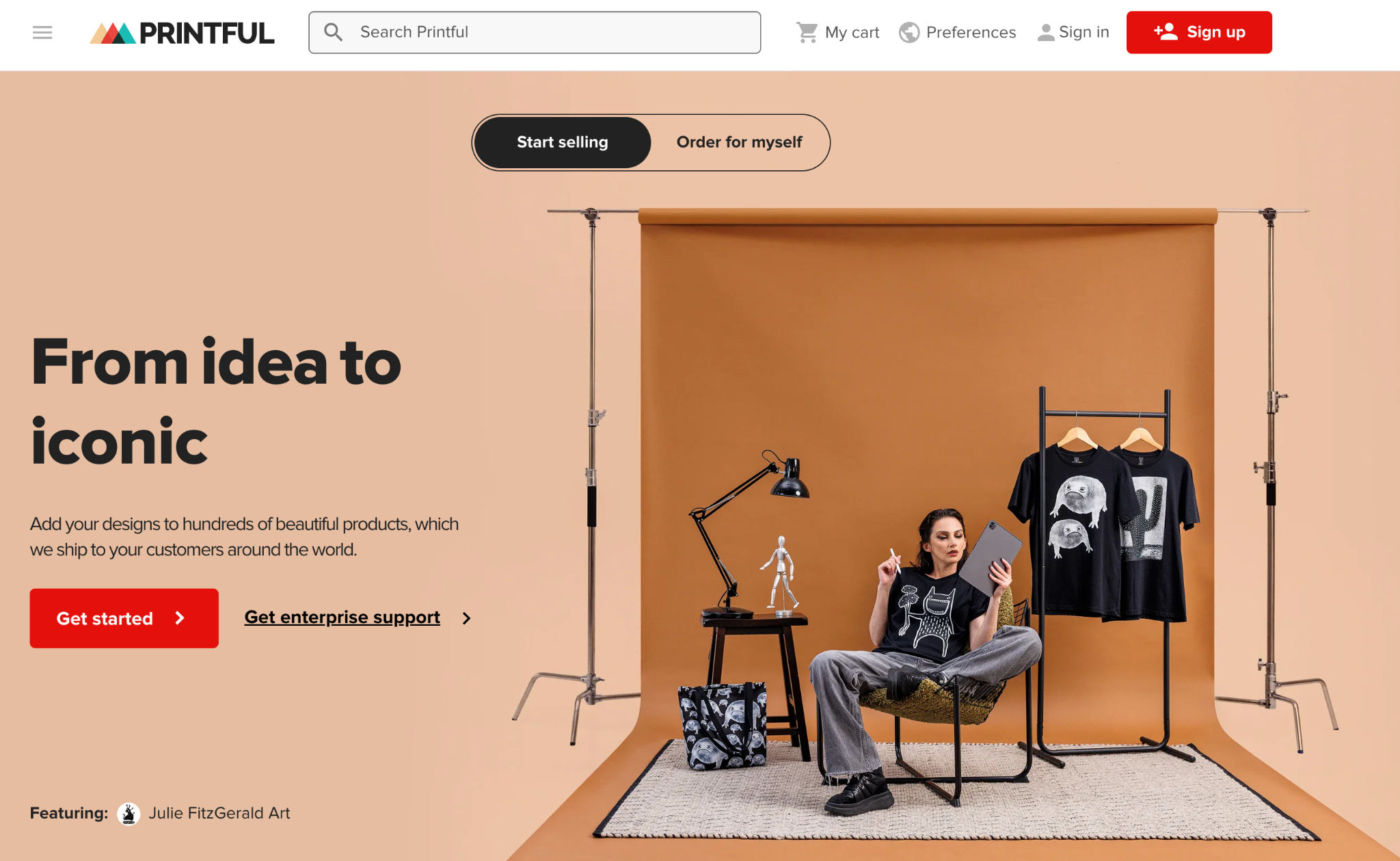
Printful operates differently from the other platforms on this list. It is not a supplier marketplace. It is a print-on-demand fulfillment network that produces custom-printed products — wall art, canvas prints, posters, tapestries, throw pillows, blankets, and more — as orders come in. No inventory risk, no minimum order quantities, and full control over the design and branding on every product.
For home decor specifically, the print-on-demand model also allows you to create a unique product catalog. Once a customer places an order, Printful handles printing, packaging, and shipping from its own fulfillment centers.
Pros
- No inventory or MOQ. Products are made when orders come in
- Full branding and custom packaging options on every plan
- 2–5 day US delivery from in-house fulfillment centers
- Wide range of home decor product types: canvas prints, pillows, blankets, posters, and more
- Integrates with most major ecommerce platforms
Cons
- Higher per-unit product costs than catalog sourcing
- Margins require a careful pricing strategy to remain healthy
- Design-dependent. The model works best with a strong visual identity
7. Wholesale2B — Best for Multi-Channel High-Volume Sellers
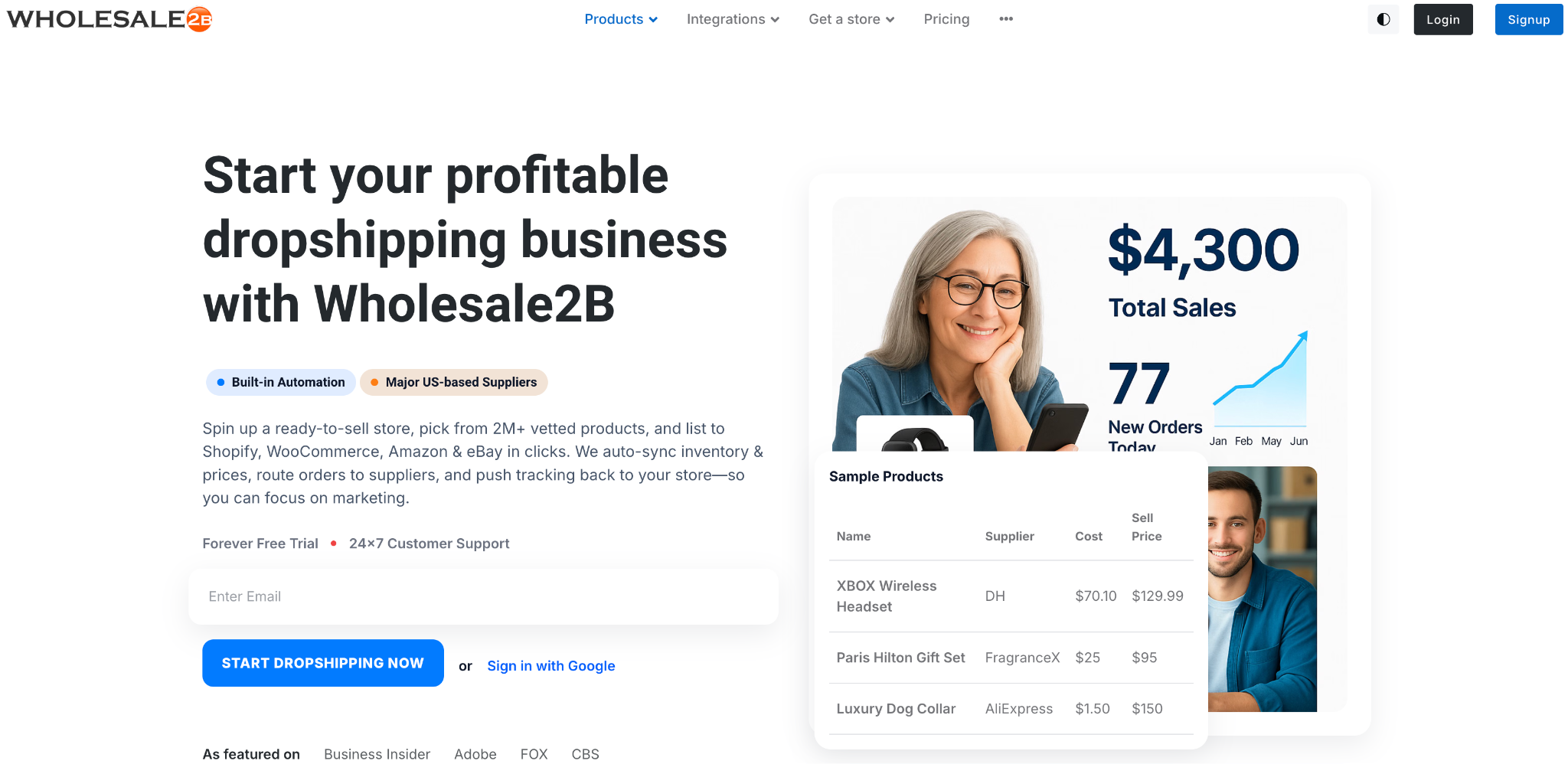
Wholesale2B is built for store owners managing high SKU counts across multiple sales channels simultaneously. The platform gives access to over one million products from verified wholesale suppliers and automates listing creation, inventory updates, and order routing across platforms, including Shopify, WooCommerce, Amazon, eBay, and more. If you are running several storefronts or scaling a single store to a large catalog, the multi-channel automation infrastructure is difficult to match at this price point.
Home decor is one of the more popular categories on the platform, and delivery times range from 1 to 7 days depending on the supplier.
Pros
- Access to 1 million+ products from verified wholesale suppliers
- Automated listings, inventory updates, and order routing
- Multi-channel support across major ecommerce platforms
- Delivery times of 1–7 days across many suppliers
Cons
- No branding or white-label options
- Supplier quality is variable, so you need to test before scaling.
- Better for scaling an existing operation than building a brand-first store
How to Choose the Right Home Decor Dropshipping Supplier
The right answer depends on three variables: where your customers are, what stage your store is at, and what operational problem you most need solved right now.
- If you are still in the research phase and have not yet validated a product niche, start with SupplierHQ. The product research and search demand tools are designed specifically to help you identify what to sell before you build a catalog, and the verified supplier database means you are sourcing from credible partners from day one.
- If shipping speed to North American or European buyers is your top priority, Spocket's US and EU supplier network delivers 2- to 7-day fulfillment.
- If you need maximum product range at the lowest per-unit cost and are comfortable with 7- to 15-day delivery windows, CJDropshipping or Syncee gives you the catalog depth to test multiple product lines without significant upfront commitment.
- If you want to reduce management overhead on an established store, AppScenic's automation stack handles inventory, pricing, and order routing without constant manual intervention. It is the right choice once you have a working catalog and need the backend to run reliably at scale.
- If your store is built around a unique visual identity, Printful's print-on-demand model lets you sell products no one else carries. The margin math requires careful pricing, but the differentiation is real and defensible.
Be sure to check subscription costs, plan tiers, and which features are gated behind higher-priced tiers before you commit to any.
The Bottom Line
The home decor dropshipping category rewards stores that combine reliable fulfillment with a clear product positioning, whether that is premium, fast, unique, or value-driven. The platform that supports that positioning is the right supplier for your store.
For most sellers starting in high-ticket home decor, SupplierHQ is the strongest starting point: verified suppliers, built-in product research, and a CRM that organizes the outreach process from day one. And if you want to learn how to build a store that converts, explore the free resources and training available through HighTicket.io.