

.png)
Finding a reliable supplier is the single biggest bottleneck most eBay sellers face. You can have a sharp niche, competitive pricing, and a clean store, but if your fulfillment chain is slow, unreliable, or out of step with eBay's policies, your seller metrics will reflect it fast.
This guide covers seven vetted supplier options that align with eBay's compliance requirements and serve a range of business models, from solo sellers testing their first niche to established stores scaling across multiple categories.
But before we get into the details:
How does eBay's dropshipping policy work?
eBay's official dropshipping policy allows dropshipping only when you own the items before listing them or hold a legitimate wholesale supplier agreement with a distributor. Sourcing from another retailer and shipping directly to your buyer without that agreement constitutes a policy violation that can result in account termination. Every recommendation in this list is made with that distinction in mind.
Quick Comparison: Top eBay Dropshipping Suppliers
Delivery windows and risk levels shift depending on how carefully you vet orders, the tools you use, and how consistently your chosen source stays in stock.
The 7 Best eBay Dropshipping Suppliers
1. SupplierHQ — Best Overall for High-Ticket eBay Dropshipping
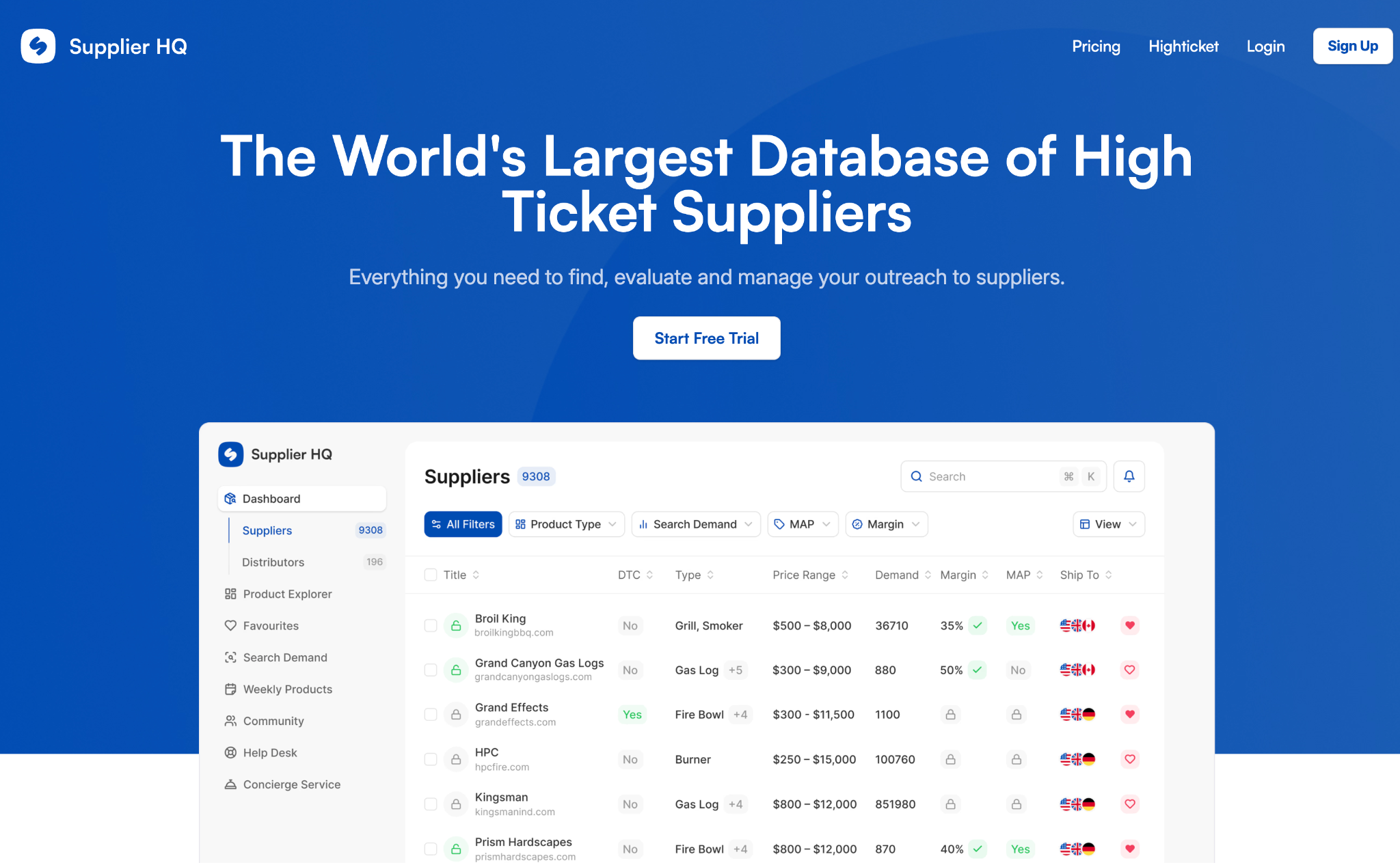
SupplierHQ is an all-in-one supplier database built specifically for dropshippers who want to move beyond low-margin, high-competition products. The platform contains over 9,000 verified high-ticket suppliers and 100+ distributors, all independently vetted by SupplierHQ's research team before going live. You're not scrolling through unverified listings hoping something sticks — you're working with a filtered, quality-controlled database from the start.
For eBay sellers, that matters a lot. eBay's seller metrics are tied directly to handling time, tracking uploads, and order accuracy. Sourcing from vetted wholesale suppliers with clear fulfillment standards reduces the operational risk associated with partnering with unknown distributors.
i. Product Explorer
Product Explorer features trending high-ticket products with the data you need to make a real decision: five-year popularity trends, seasonality curves, and average price points for each product. If you're trying to figure out what to sell before you commit to a niche, this feature cuts through a lot of the guesswork.
You can select a product category, view the top trending items in that niche, and immediately see which suppliers carry each product — including their price range, profit margin, MAP (Minimum Advertised Price), and shipping location. Product research and supplier matching happen on the same page.
ii. Search Demand
Search Demand lets you validate whether a product has consistent buyer intent behind it, not just a brief spike in social interest. Enter a product name and target location, and you'll see local and global search volume, seasonality patterns, long-term trend data, and cost-per-click figures. That tells you whether interest in a product is growing, leveling off, or fading — before you build listings around it.
iii. Supplier Management CRM
SupplierHQ includes a built-in CRM for managing supplier outreach. When you find a supplier worth pursuing, you add them to your list and track the relationship from first contact through to a signed partnership. The platform provides outreach templates used by high-ticket dropshippers to initiate supplier conversations — useful if you've never done cold outreach before.
You can create folders to segment suppliers by product type, price tier, or niche. That kind of organization becomes important when you're running multiple stores or testing several categories at once.
iv. Distributor Access
Beyond individual suppliers, SupplierHQ includes a dedicated distributor database. New dropshippers often overlook distributors, but they can be a faster path to accessing multiple brands through a single relationship. Each listing includes the address, phone number, website, email, and the brands they carry — everything you need to initiate contact without additional research.
Pros
- Over 9,000 verified high-ticket suppliers and 100+ distributors, with research team validation on every listing
- Filter by price, search demand, profit margin, MAP, and shipping location
- Product Explorer with five-year trend data, seasonality, and top supplier matches on the same page
- Search Demand feature validates product interest with real search volume and CPC data
- Built-in supplier outreach CRM with contact tracking and pre-built outreach templates
- No store integration required
- US-based, fast-shipping suppliers available across most major high-ticket niches
Cons
- Advanced features and full database access require a paid subscription
- Focused on high-ticket products — less suited if you're primarily targeting sub-$50 impulse buys
Best for: eBay sellers targeting higher-priced product categories who want a research-led sourcing process and direct access to vetted wholesale suppliers.
2. TopDawg — Best for Seamless eBay Integration
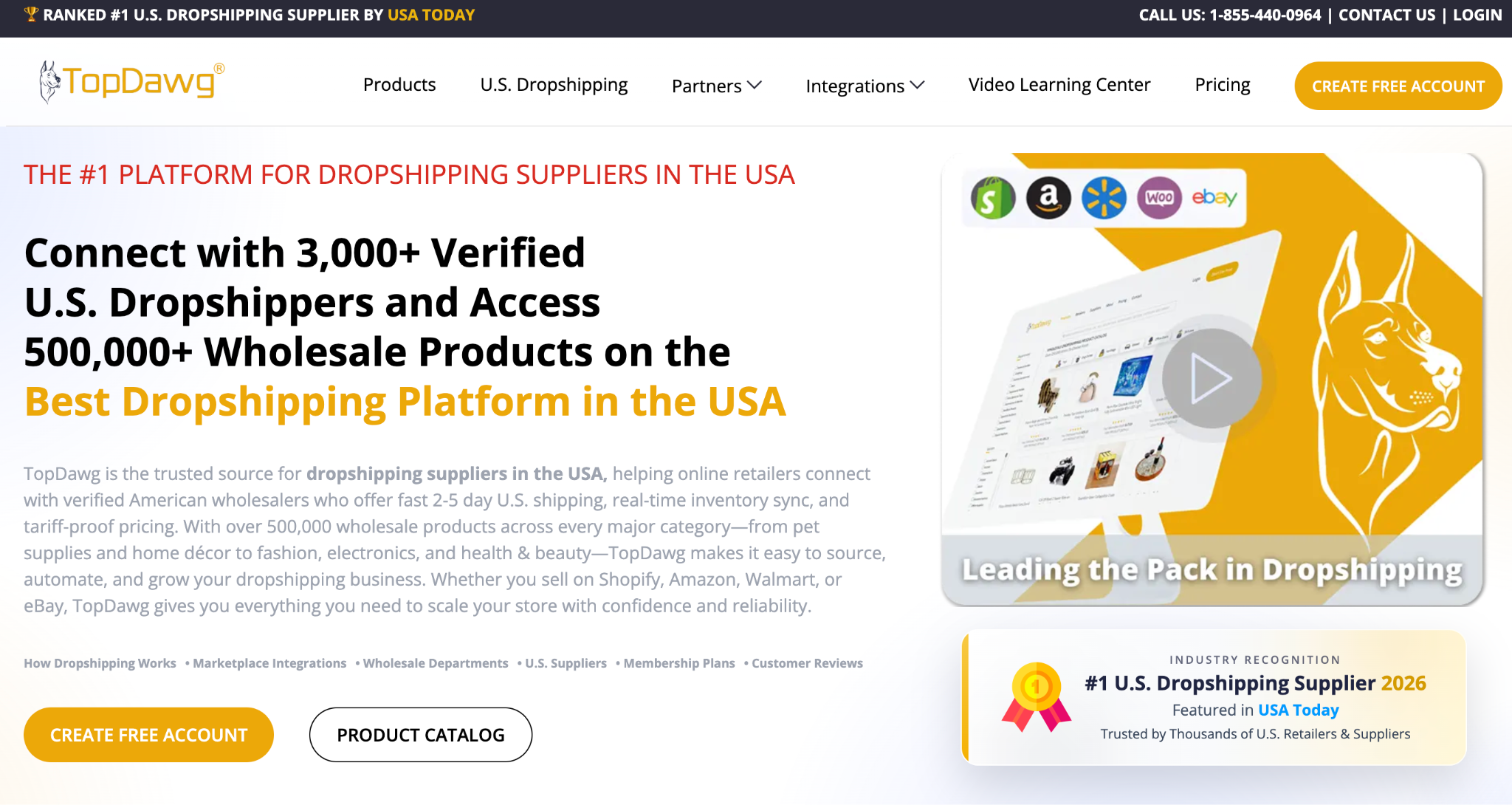
TopDawg addresses one of the more frustrating operational puzzles eBay sellers deal with: syncing a dropship catalog to an active store without breaking listings or triggering policy flags. It does this through a dedicated eBay dropshipping app that connects your store to its wholesale dropship network without requiring manual CSV uploads or third-party middleware.
The app pulls product data, images, and inventory counts directly into your eBay account, so what buyers see reflects what is actually available. Because TopDawg operates as a wholesale dropship network rather than a retail arbitrage source, its supplier relationships align with eBay's requirement for a legitimate wholesale supplier agreement.
Pros
- Dedicated eBay integration with automated order routing and inventory sync
- Wholesale supplier network that meets eBay's compliance requirements
- Multi-category catalog with room to test niches without upfront inventory commitment
Cons
- Catalog depth varies by category — sellers in highly specialized niches may find fewer options than a broader wholesale directory would offer
Best for: eBay sellers who want a single platform handling both supplier access and marketplace integration without patching together separate tools.
3. SaleHoo — Best Vetted Supplier Directory
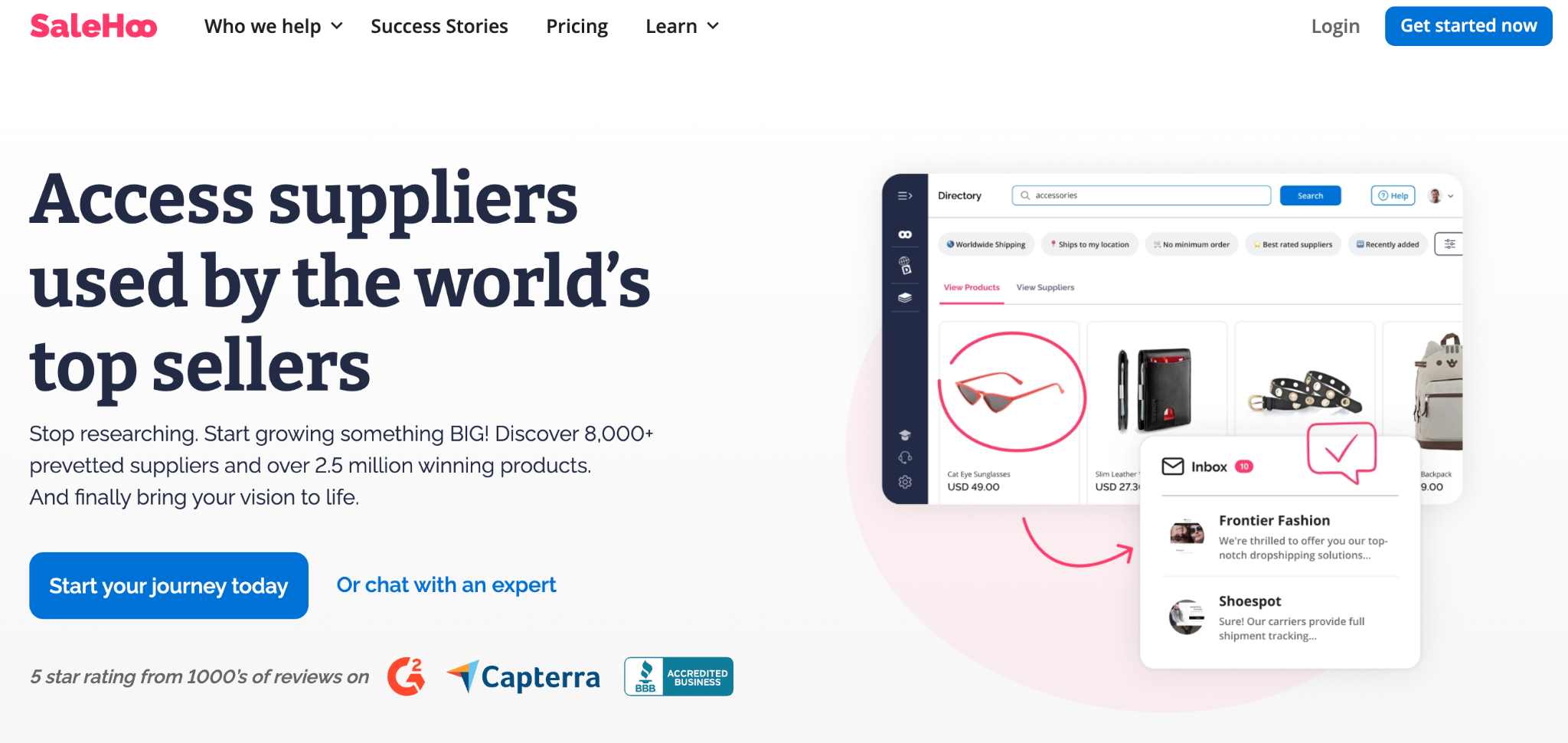
SaleHoo gives eBay sellers access to more than 8,000 vetted wholesalers and a product database spanning 2.5 million items, all behind a membership paywall that filters out unreliable sources and keeps the supplier quality consistent.
The directory model works differently from platforms that process orders on your behalf. Instead of acting as a middleman, SaleHoo connects you directly to suppliers so you can negotiate pricing, set your own margins, and build relationships that meet eBay's performance standards.
For sellers working across multiple niches or scaling toward higher volume, the database also serves as a research tool. You can cross-reference suppliers, compare wholesale pricing across multiple sources, and identify backup vendors before you actually need them.
Pros
- 8,000+ vetted wholesalers with supplier quality filtered by SaleHoo's team
- Direct supplier relationships mean you control pricing negotiations and margins
- Works well as a sourcing layer alongside separate inventory management tools
Cons
- Requires more legwork than plug-and-play platforms
- More time investment upfront before your first order ships
Best for: Sellers still mapping out their niche who want a vetted directory to explore categories before committing to a single catalog or supplier relationship.
4. Spocket — Best for Fast US and EU Shipping
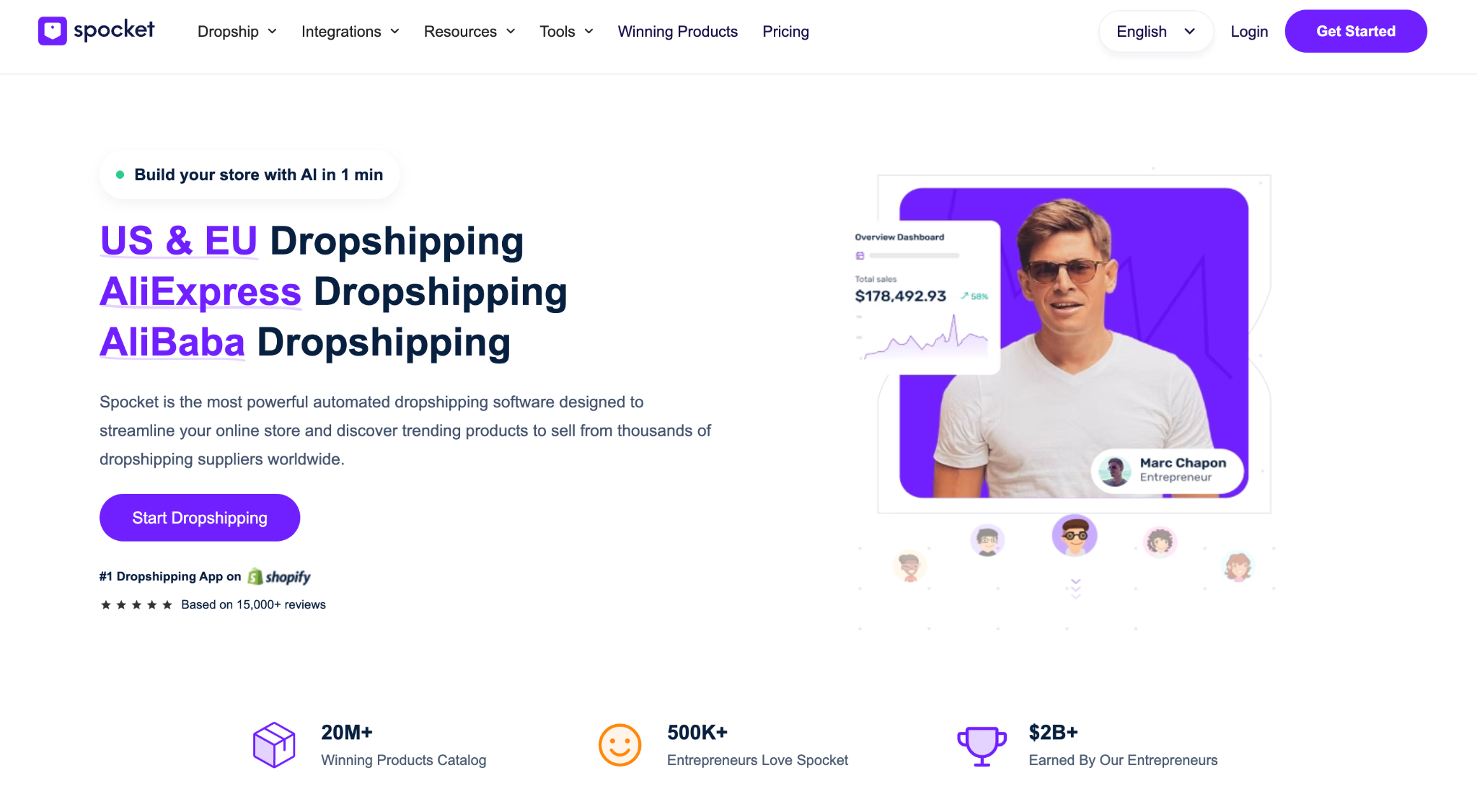
Spocket focuses exclusively on US and EU suppliers. Domestic and regional orders arrive within two to seven business days, compared with the two to four weeks common with China-based alternatives.
Also, Spocket's catalog skews toward lifestyle goods, apparel, beauty, and home products. The platform provides branded invoicing, which keeps the supplier relationship invisible to the end buyer, and inventory sync tools that flag stock changes before they cause oversold listings.
Pros
- US and EU supplier network with 2–7 day delivery windows
- Branded invoicing keeps supplier relationships invisible to buyers
- Inventory sync reduces the risk of overselling out-of-stock items
Cons
- Domestic and European suppliers carry higher wholesale costs than Asian-sourced alternatives
Best for: eBay sellers where faster domestic or regional delivery is a priority.
5. CJdropshipping — Best for Customization and Global Fulfillment
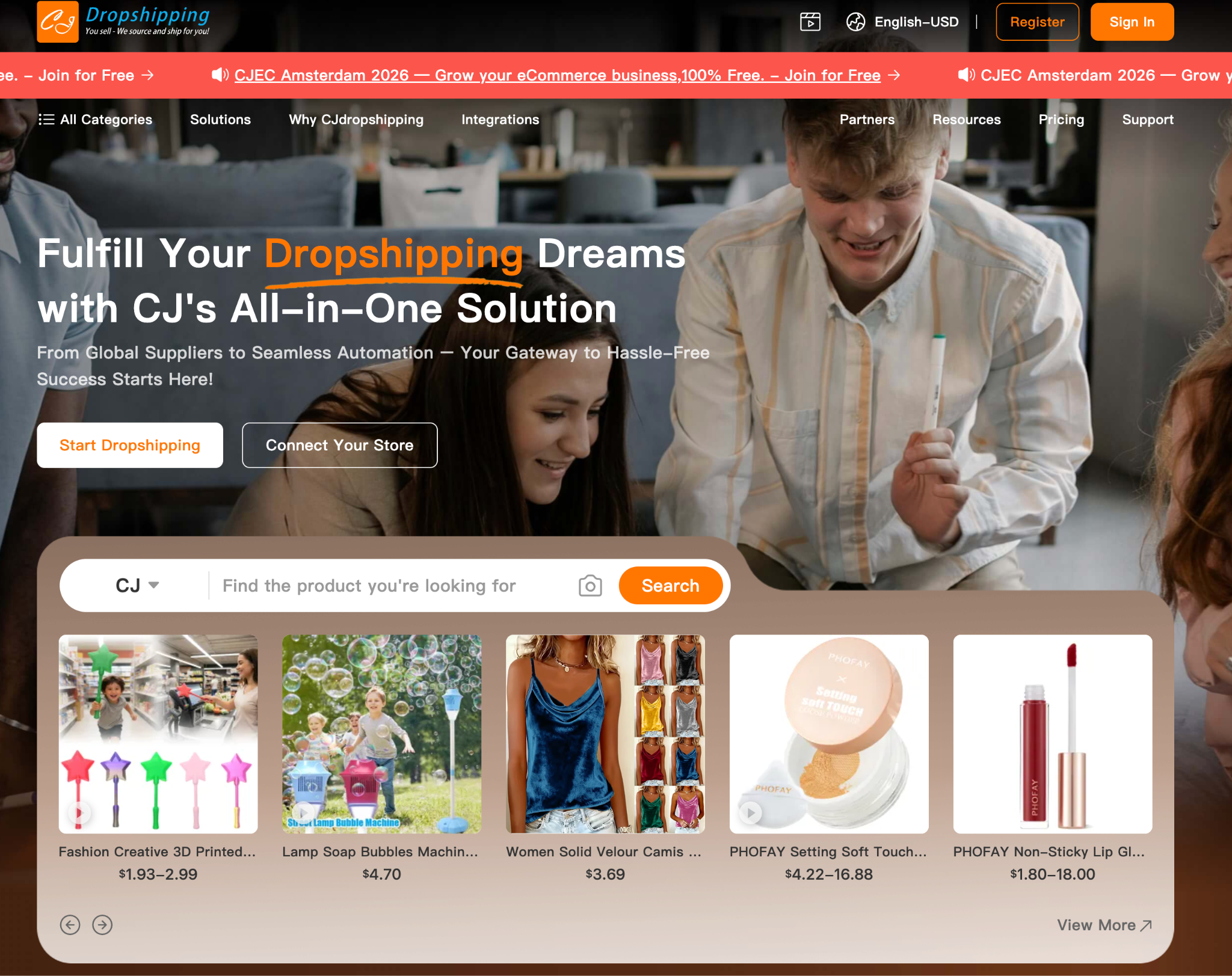
CJdropshipping is built for sellers who want more than a generic white-label product. It combines fulfillment infrastructure and product customization in one place, which puts it closer to a branded fulfillment service than to a standard dropship directory, but with a much broader general merchandise catalog underneath.
CJdropshipping operates from eight global warehouses across the US, Germany, China, and several other regions, so delivery windows can be competitive depending on where your eBay buyers are located. Printing and customization services mean you can source a product, apply your branding, and ship it internationally without juggling multiple vendors.
Pros
- Product customization and branded packaging are available through one platform
- Eight global warehouses with competitive delivery for international buyers
- Wide product catalog with custom sourcing requests available
Cons
- Quality control can vary by product line
Best for: Sellers who want product customization, branded packaging, or access to a proprietary global warehouse network.
6. AliExpress — Best for Product Variety and Market Research
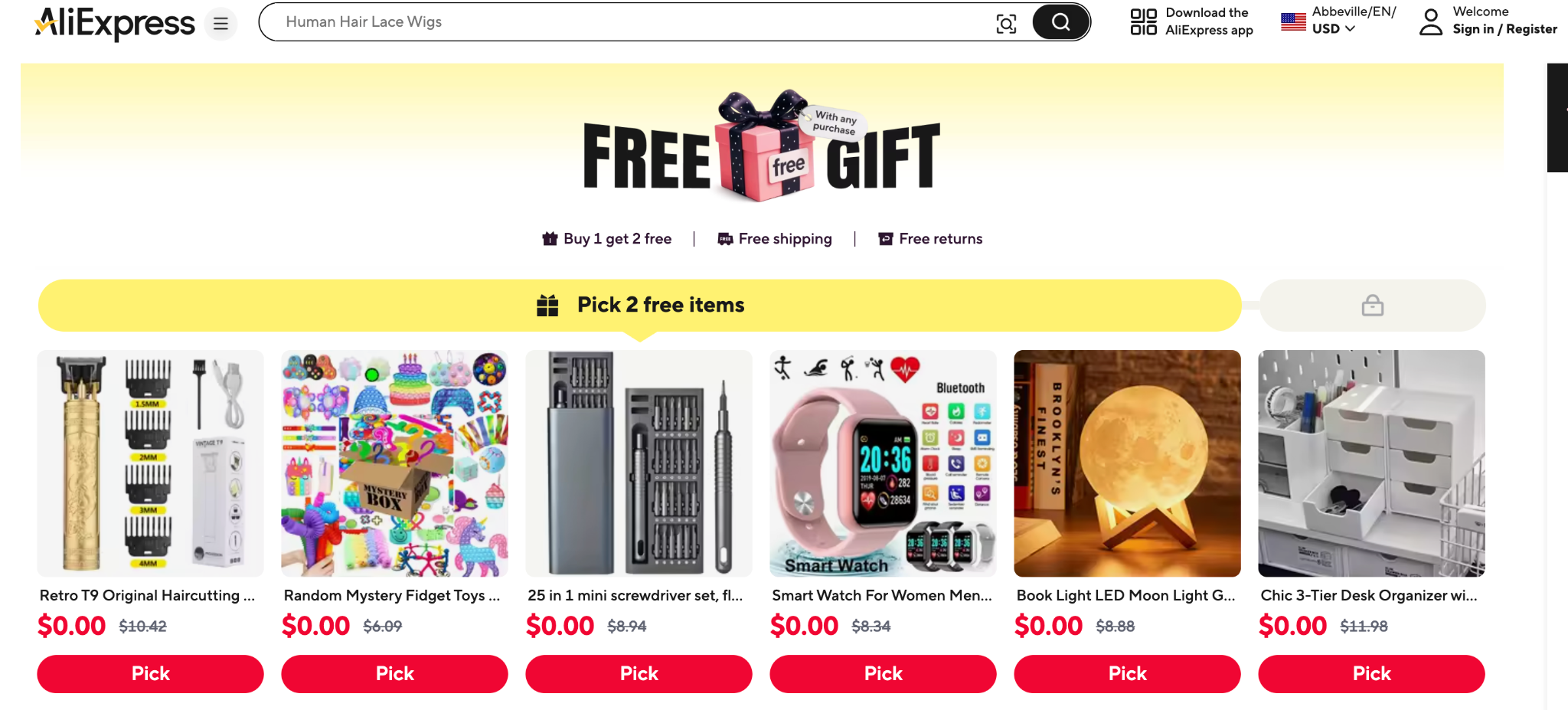
AliExpress gives eBay dropshipping sellers access to over 100 million products, along with a free Dropshipping Center that surfaces supplier analytics, order volume data, and product performance trends without requiring a paid subscription.
The breadth of inventory means you can source from a single account across dozens of categories, rather than managing multiple vendor relationships. Electronics, home goods, apparel, tools, and hobby items all live on the same platform. The Dropshipping Center functions as a lightweight research tool that lets you filter products by shipping reliability, supplier history, and buyer feedback before committing to a listing.
Pros
- 100+ million products across virtually every category
- Free Dropshipping Center with supplier analytics and performance data
- No monthly platform fee for basic access
Cons
- Most sellers ship from China
Best for: Sellers building broad, multi-category eBay stores who prioritize product diversity and want free analytical tools without a monthly platform fee.
7. Doba — Best for Streamlined eBay Setup
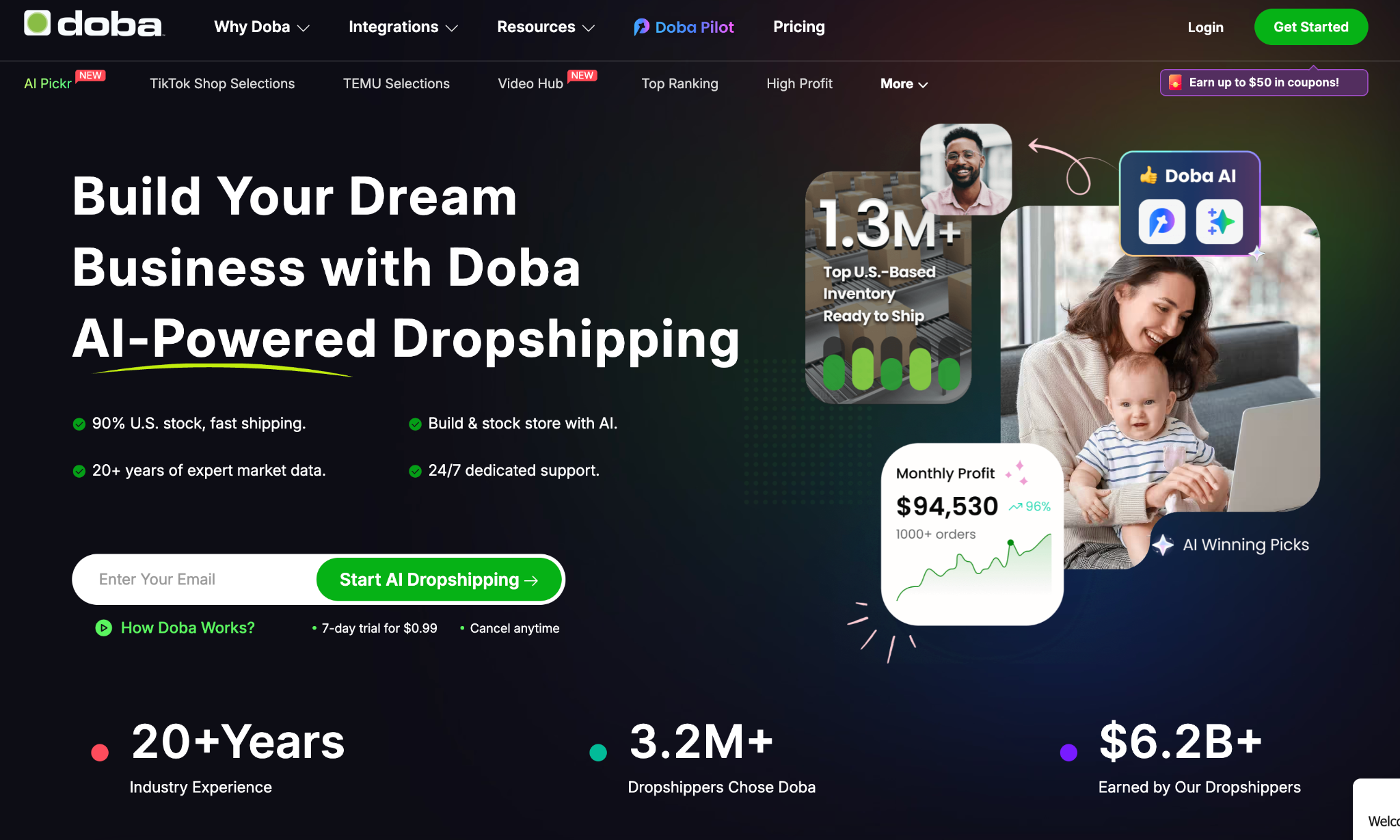
Doba integrates directly with eBay and vets its supplier network to ensure reliability and prevent fulfillment delays, making it a strong option for sellers who want a low-friction setup from day one. Rather than requiring you to negotiate directly with individual wholesalers, Doba acts as the intermediary that connects your eBay store to its supplier network through a single interface.
Pros
- Direct eBay integration with a vetted supplier network
- Removes the need for individual supplier negotiations at the start
- Focused on reducing fulfillment delays through supplier vetting
Cons
- Less margin control than sourcing directly from wholesalers
- The intermediary model means you're working with Doba's pricing structure, not negotiating your own
Best for: New eBay sellers who want a streamlined, low-friction setup and are not yet ready to manage direct wholesale relationships.
How to Choose the Right eBay Dropshipping Supplier
Choosing a supplier is one of the most consequential decisions you'll make as an eBay seller. Get it wrong, and you're dealing with late shipments, policy violations, and negative feedback before you've had a chance to build momentum. Here are five steps to make the right call.
Step 1: Confirm the supplier meets eBay's policy requirements:
Before anything else, verify that the supplier you're considering qualifies under eBay's dropshipping policy. You need either a legitimate wholesale supplier agreement or ownership of the inventory before listing. Sourcing from a retail storefront — Amazon, Walmart, Home Depot — without a proper arrangement puts your account at risk. Any supplier worth working with should be able to provide documentation of a wholesale relationship; if they can't, walk away.
Step 2: Evaluate fulfillment speed against your competition:
Delivery time is a direct factor in your eBay feedback score and conversion rate. Look at the listings you'll be competing with and note the estimated delivery windows they're promising.
If your supplier ships from overseas in three to four weeks and competitors are delivering in four to seven days, that gap will cost you sales and reviews. Domestic or regional suppliers cost more at the wholesale level, but faster delivery often justifies the margin trade-off in competitive categories.
Step 3: Stress-test the supplier's inventory reliability:
A supplier that regularly goes out of stock on active listings forces you into cancellations, which eBay penalizes directly. Before committing to a catalog, check whether the supplier offers real-time inventory sync, how frequently they update stock counts, and whether they carry backup SKUs in core product lines. Running a small test order before pushing any supplier's products live is the simplest way to surface fulfillment problems before they affect your metrics.
Step 4: Run the margin math before you list anything:
Wholesale price is only the starting point. Factor in eBay's final value fees, payment processing fees, shipping costs, and any platform subscription fees before deciding whether a product is worth listing.
A common mistake is building a store around products with tight margins that look profitable on paper but break even, or worse, once fees are accounted for. As a general benchmark, your wholesale cost should sit no higher than 50 to 60 percent of your target selling price before fees. High-ticket products typically give you more room to work with here than low-priced, high-volume items.
Step 5: Match the supplier to your current stage, not your end goal:
A vetted wholesale directory like SupplierHQ makes sense when you're doing product research and building out a high-ticket niche. A plug-and-play platform like TopDawg or Doba makes sense when you want to move fast without negotiating with individual suppliers.
Final Thoughts
Supplier selection is not a one-time decision. The right partner at the research stage is often different from the right partner at scale, and the best eBay dropshipping businesses tend to evolve their sourcing stack as they grow.
If you're targeting higher-priced products, SupplierHQ is the most complete starting point on this list. The combination of verified wholesale suppliers, product trend data, search demand validation, and a built-in CRM gives you the infrastructure to source seriously from day one — without stitching together three separate tools to do it.
Ready to find your first high-ticket supplier? Try SupplierHQ free for 14 days and get access to over 9,000 verified wholesale suppliers, product trend data, and search demand tools built specifically for dropshippers who want to move beyond low-margin products.
Want to go deeper on the strategy side before you start? Brook Hiddink's YouTube channel covers high-ticket dropshipping in detail — from niche selection and supplier outreach to store setup and scaling.
Frequently Asked Questions
Is dropshipping allowed on eBay?
Yes, but with conditions. eBay permits dropshipping when you have a legitimate wholesale supplier agreement or own the items before listing them. Sourcing from a retail platform like Amazon and shipping directly to your eBay buyer without a wholesale agreement violates eBay policy and can result in account suspension.
What is the biggest risk with eBay dropshipping?
The most common operational risk is stock mismatches — listing an item that goes out of stock before the order is fulfilled. This leads to cancellations, which directly damages your eBay seller metrics. Using suppliers with real-time inventory sync significantly reduces this exposure.
Can I use Amazon or Walmart as an eBay dropshipping supplier?
Technically, many sellers do, but it's risky. Amazon packaging arriving at an eBay buyer's door is a well-documented problem that triggers complaints and policy flags. If you use retail sources, you need robust order management processes to mitigate that exposure.
How much margin should I expect from eBay dropshipping?
Margins vary by category and sourcing model. High-ticket products sourced directly from wholesalers typically yield better margins than low-ticket retail arbitrage, where eBay and PayPal fees, along with shipping costs, can quickly compress profitability to near zero. As a starting benchmark, look for products where the wholesale cost is 50–60% or less of your target selling price before fees.
What's the difference between a supplier directory and a dropship platform?
A directory like SupplierHQ connects you to suppliers you then work with directly — you negotiate pricing, place orders, and manage the relationship yourself. A dropship platform like TopDawg or Doba acts as an intermediary, routing orders on your behalf and handling the supplier relationship for you. Directories give you more control and typically better margins; platforms offer faster setup and less manual management.