

Product branding is more than just a logo or a catchy slogan. It is how your customers perceive your product or service.
Get it right, and many customers will purchase your product. Conversely, wrong or subpar product branding will hurt your conversion rate.
Don’t take my word for it, though. According to research:
- 77% of consumers make purchase decisions based on brand name rather than the product name itself
- 63% of customers are more willing to buy from brands they already feel familiar with
We’re living proof of this ourselves. Think about it: when was the last time you purchased something from an unfamiliar brand? Exactly. We all prefer to make informed decisions before buying, and your customers do, too.
The financial case goes beyond consumer preference, too. McKinsey’s research tracking a portfolio of the world’s top 40 brands found that it has beaten the MSCI World index every single year since 2000, reaching a 73% outperformance in 2014 alone.
In this article, you’ll learn the basics of product branding, why you need it, and ten practical steps to get started.
What is Product Branding?
Product branding is the process of creating a unique identity through your name, logo, design, packaging, messaging, and overall customer experience. It helps distinguish your product from competitors, aids brand recall, and builds consumer loyalty.
Examples of brands with a strong branding strategy include Coca-Cola’s red-and-white design, Apple’s sleek, minimalist approach, and Nike’s swoosh logo paired with the “Just Do It” slogan.
Why is product branding important?
- It differentiates your product from the competition
- It commands a higher perceived value. Customers pay more for brands they recognize and trust
- It guarantees a unified and consistent message across every marketing channel
- It creates an emotional bond with consumers, which drives brand equity and customer lifetime value
- It reduces customer acquisition cost over time. Harvard Business Review found the cost of acquiring a new customer runs 5 to 25 times higher than retaining an existing one, and customers who recognize your brand are a large part of that retained group
Learn exactly how to implement this brand-building strategy inside the HighTicket.io Program, built for entrepreneurs serious about scaling.
How To Brand Your Product In 10 Steps
Jeff Bezos says, “Your brand is what other people say about you when you are not in the room.” I definitely agree.
Building a brand means creating a strong, memorable image of your products in people’s minds. It makes you their first choice when they’re searching online for related products.
Here are the steps to develop a compelling brand identity and brand image that resonates with your customers.
1. Identify Your Target Audience
The first step to successful branding is identifying your target audience. Your product isn’t meant for everyone, so narrow your focus to the group that will benefit most from what you offer.
To do this, create a buyer persona, a detailed profile that represents your ideal customer. A detailed persona should contain:
- Demographics: Age, gender, income, education, and location
- Psychographics: Interests, values, lifestyle, and personality traits
- Challenges: Specific problems your product or service can solve
- Buying Behavior: Preferred shopping platforms, frequency of purchases, and other decision-making factors
- Online Activity: Social media usage, favorite hashtags, and preferred content types
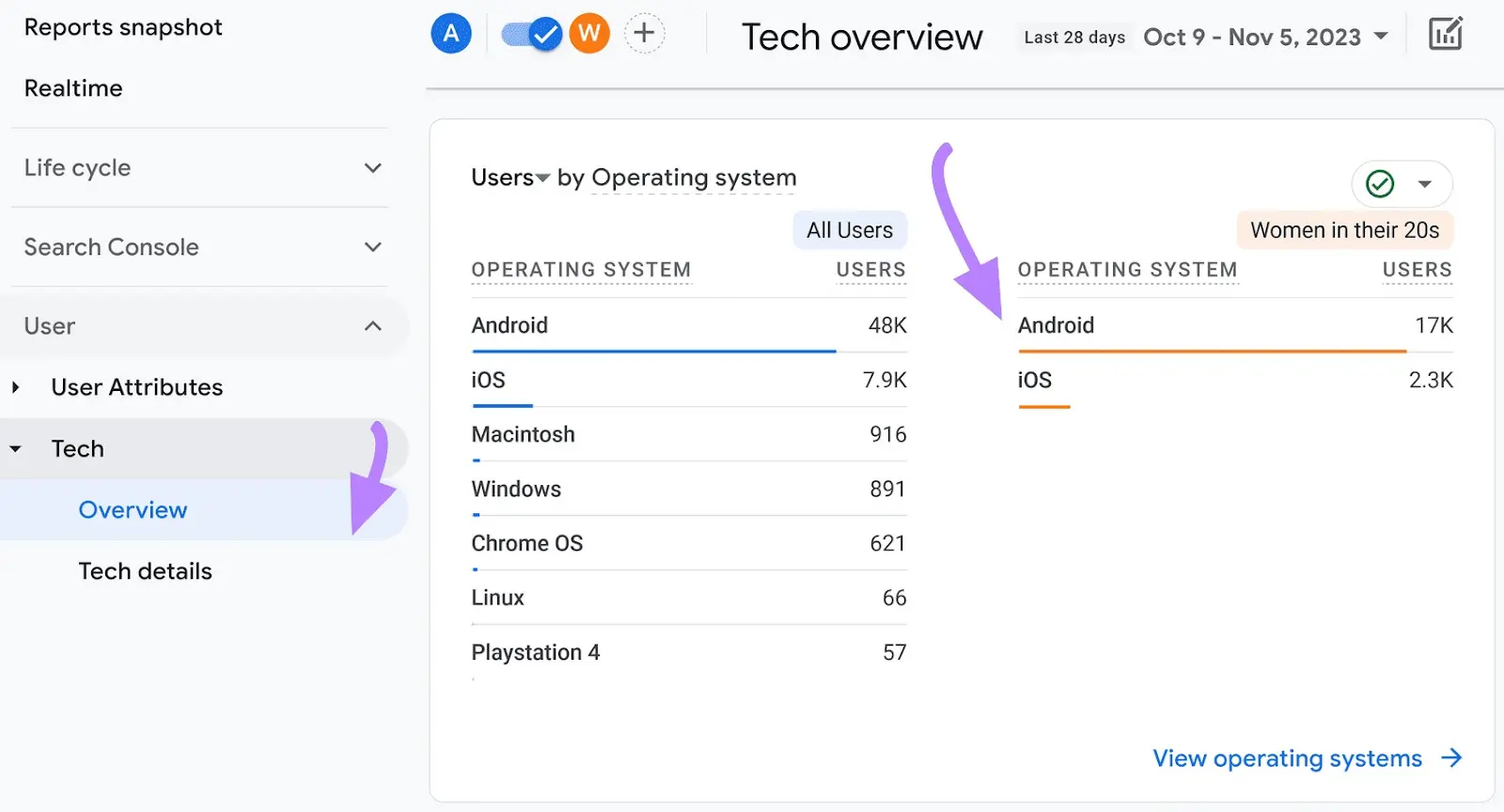
Tools like Google Analytics, HubSpot, or Google Search Console can give you a starting point for your audience demographics.
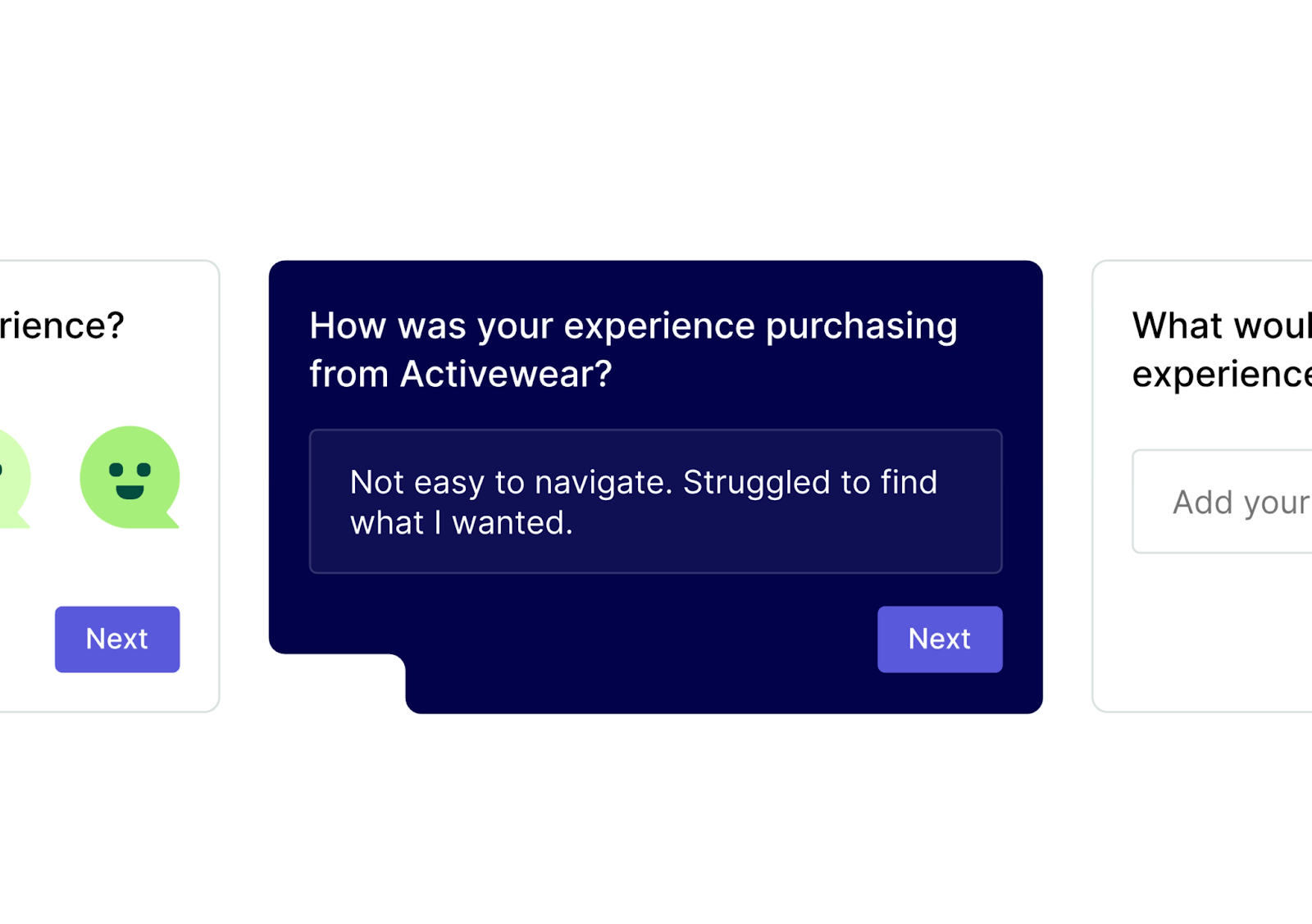
You can also gather qualitative data directly from your audience by inserting pop-up forms with Hotjar:
SparkToro is another useful tool. It reveals which websites, podcasts, and social accounts your audience actually pays attention to, which is invaluable for channel selection.
Beyond demographics, consider the Jobs-to-be-Done (JTBD) framework: ask what “job” your customer is hiring your product to do. A person buying a fitness tracker isn’t just buying a device. They’re hiring it to make them feel accountable. This lens sharpens your messaging far more than age and income alone.
If you’re just getting started, read our 7-Step Dropshipping Guide to understand the foundation of launching your online store before diving into branding.
Read more: Quantitative vs qualitative user research and how to create a buyer persona.
2. Do a Competitor Analysis
After identifying your target audience, the next step is conducting a competitor analysis to determine your market’s strengths, weaknesses, opportunities, and threats. This is called a SWOT analysis, and it helps you uncover key insights about your competitors and opportunities to capitalize on.
This data also helps you answer questions like:
- What are my competitors doing right?
- Where are they falling short, and how can I fill those gaps?
- How can I position my products or services to attract my target audience?
Some of the vitals to look out for are:
- Brand Identity (includes logo, color, typography, and brand message)
- Customer Reviews, the best place to get honest information about your competitors’ strengths and weaknesses
- Package material quality and sustainability
- Functionality (in terms of website usability)
- Brand consistency across various channels
- Customer experience (unboxing)
Practical tools for competitor brand analysis:
- SEMrush or Ahrefs, audit competitor content and keyword positioning
- SimilarWeb, benchmark traffic sources and audience overlap
- Brandwatch or Mention, monitor share of voice and sentiment
- Manual review of competitor Amazon, Trustpilot, or G2 reviews to surface recurring customer complaints you can address
Pay particular attention to the language competitors use in their taglines and ad copy. This reveals the emotional territory they’re claiming, and shows you the white space available for your brand differentiation and competitive positioning.
With this data, you’ll identify opportunities to stand out in the marketplace. Read more on competitive analysis for branding.
3. Create a Memorable Brand Name
The best brand names are concise, simple, and memorable. A strong name captures your brand’s essence and unique values.
To create a lasting brand name, focus on the emotions you want your audience to connect with your brand. Ideally, your brand name should resonate with them, as it goes a long way in building brand loyalty. More importantly, it should be flexible enough to grow with your business.
After choosing a brand name, define the idea behind it. For example, Nike’s name evokes winning (it’s named after the Greek goddess of victory), and Apple’s branding leans into simplicity.
Tip: Confirm that the domain and business name are available and don’t have negative meanings in other languages. Also run the name through the USPTO Trademark Electronic Search System (TESS) before committing – you don’t want to be involved in a trademark conflict after launch!
4. Build Your Brand Image
People first think of your brand image when they hear your name. You think of entertainment when you hear Netflix, and luxury fashion when you hear Louis Vuitton. That’s the power of a strong brand image.
A strong brand image:
- Reflects your company’s purpose and values
- Sets you apart from competitors
- Attracts the right audience
To build a strong image, start with these foundations.
Define Your Mission and Vision
Your mission statement answers why your brand exists today. Patagonia’s mission is “We’re in business to save our home planet.” Your vision statement answers where you’re going. Tesla’s vision statement is “To create the most compelling car company of the 21st century by driving the world’s transition to electric vehicles.” These two sentences become the internal compass every brand decision gets checked against. Write them before you write anything else.
Create a Position Statement
This outlines what makes your brand unique and why customers should choose you. Keep it concise and easy to read, while highlighting your value proposition and USP.
You can use this framework:
“For [Target Audience], [Brand Name] is the [Product Category] that [USP], because [Reason to Believe]. Unlike [Competitor], we [Unique Differentiation].”
Example: “For first-time e-commerce entrepreneurs, High Ticket is the coaching platform that teaches high-ticket dropshipping, because our founder built a $30M+ student revenue track record doing exactly that. Unlike generic business courses, we focus exclusively on premium-priced products with higher margins.”
Develop a Brand Voice
Every brand should have a unique voice, just like humans. Think of your brand as a person. How would you describe it? Friendly, professional, or playful? Your brand tone should match your values and resonate with your audience.
Document your brand voice in a one-page style guide that specifies: (a) three adjectives that describe your tone, (b) two things your brand would never say, and (c) a before-and-after example rewriting a generic sentence in your brand’s voice.
Tip: If you run a franchise brand or have a marketing team, create comprehensive brand guidelines that outline your communication style. This keeps your voice consistent across all channels and touchpoints.
5. Create a Compelling Brand Story
Everybody likes a story. A story is a powerful tool for connecting with your target market, reinforcing authenticity, and setting your brand apart.
A well-crafted brand story personalizes your brand and allows you to attract users who share similar values. It’s an opportunity to highlight why your brand exists, the challenges you’ve overcome, and the impact you want to make.
For instance, I started High Ticket to help regular people build a sustainable high-ticket online business; that’s how I coined the brand name. After failing multiple times to find what works in the e-commerce industry, High Ticket is my way of giving back, connecting with like-minded individuals and helping them surmount (or avoid) the roadblocks I faced.
Today, High Ticket has helped over 2,000 students worldwide and generated $30M+ in revenue for them.
As you can see, a compelling brand story helps your target customers understand the “why” behind your product.
So, think about what inspired you to start the company, the interesting ways you overcame some difficulties, or how much work you did to create the perfect solution for your customer.
See this excellent example from United by Blue, a sustainable and ethical goods brand:
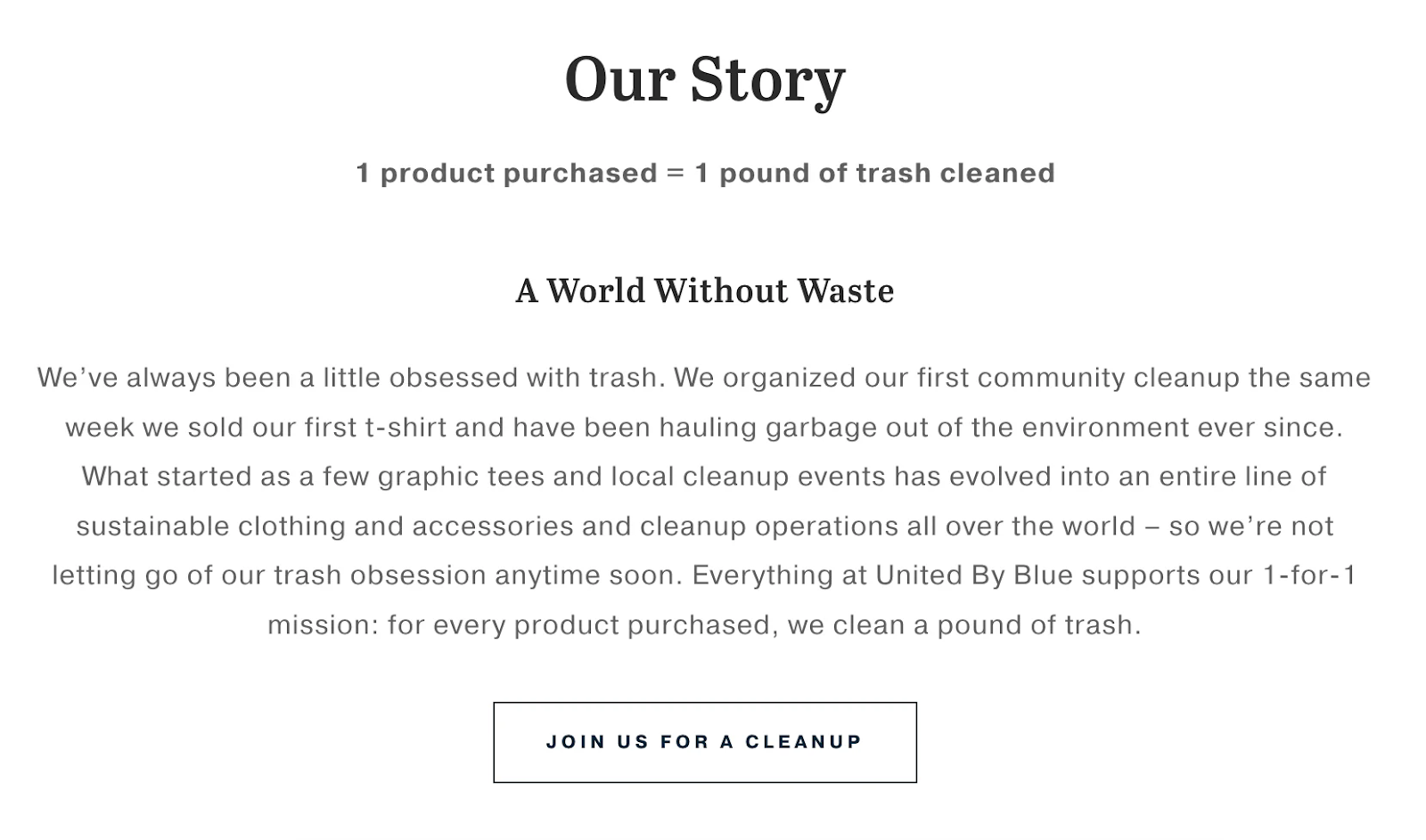
A compelling brand story helps your target customers understand the “why” behind your product. Think about what inspired you to start the company, the ways you overcame difficulties, or how much work you put into creating the right solution for your customer.
Other tips to help you create a relatable brand story:
- Understand your product and how it fits into your story. This will help you sell an outcome instead of a product.
- Keep your brand story clear and straight to the point.
- People connect with people. Tell YOUR story. Show the human side of your brand.
- Be authentic. Customers can easily sniff out a hollow story from the get-go. A useful structure is the Hero’s Journey arc: your customer is the hero, your brand is the guide, and your product is the tool that helps them defeat their challenge. This framework underpins brands like Apple (“Think Different”) and Nike (“Just Do It”).
- Live up to your story. Your brand values should never differ from the product’s purpose.
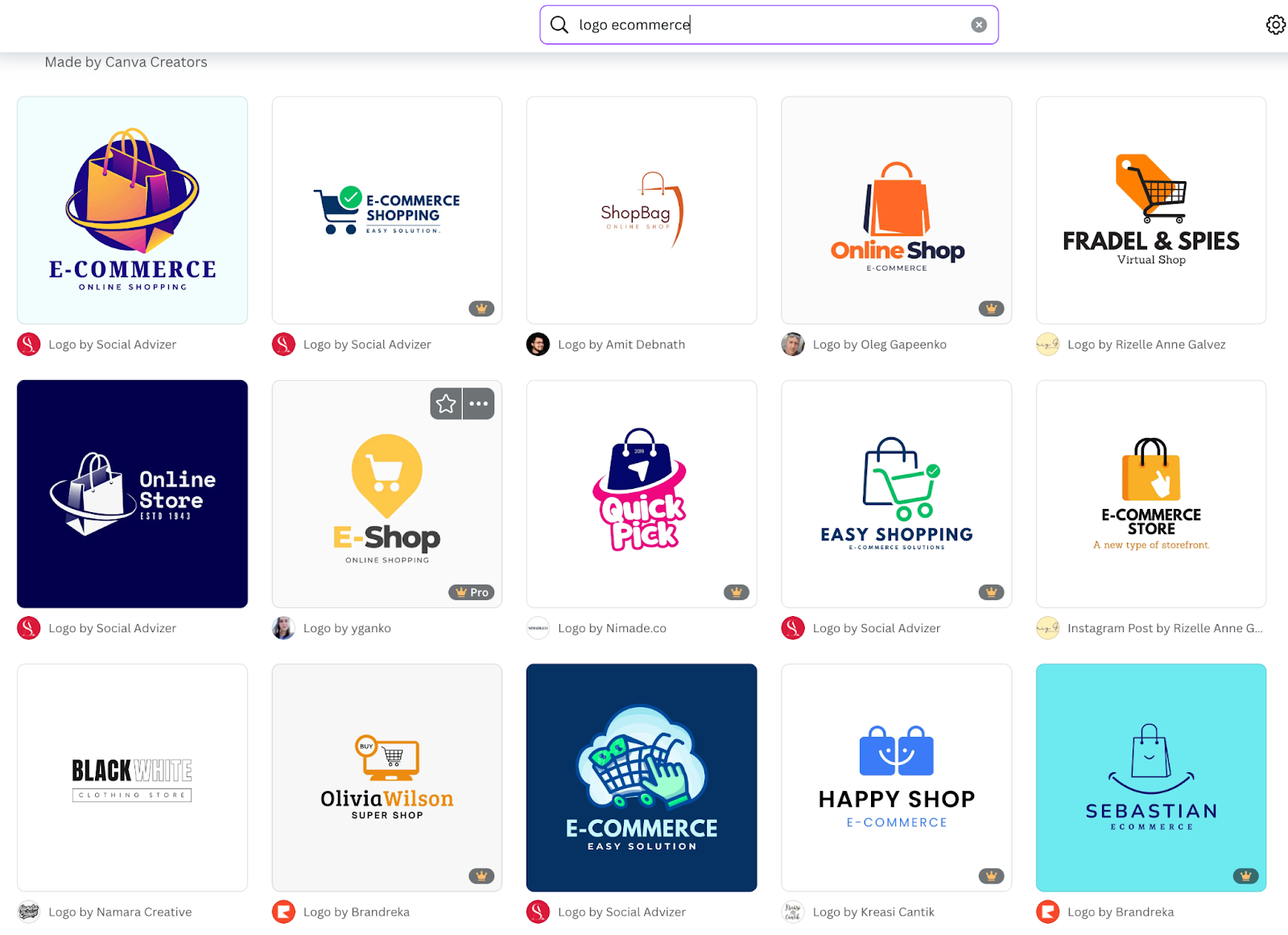
6. Create a Memorable Brand Logo
Your logo isn’t just a random image; it’s the face of your brand. It’s the first thing customers notice and the symbol they associate with your business. You need one that:
- Tells your story
- Is timeless and unique
- Communicates your brand clearly
- Is eye-catching and memorable
Your logo doesn’t have to follow conventional styles. There are different options you can explore:
- Wordmark: Use your company name as the logo, like Google or Disney. Focus on typography and colors to communicate elegance or sophistication.

- Pictorial Mark: Choose an icon or symbol to represent your brand and make it instantly recognizable.

- Abstract Mark: Get creative with shapes, lines, and colors to express your brand’s essence, like Pepsi’s swirling circle or Mercedes-Benz’s star.
- Emblem: Combine text and imagery in a badge-like design to highlight tradition or heritage.
- Mascot: Create a character to build emotional connections and appeal to families or kids.
Once you’ve chosen a design you love, display it on your website and other platforms.
Tip: Test your logo in grayscale before finalizing. If it loses clarity without color, the underlying shape isn’t strong enough. The best logos work in a single color. Tools like Canva or Adobe Illustrator can help you prototype concepts before hiring a professional designer.
7. Establish a Visual Expression
This is the glamorous and colorful part of your brand. It involves all the visual elements that make up your brand – think website, billboards, product packaging, store design, and more.
Which color should you use?
Every color has an inherent meaning and can evoke specific emotions in your audience. Red is associated with passion and energy. Blue signifies trust and tranquility.
Choose the color that best connects with your target audience and reflects your brand’s core values. If you want to project peace and trustworthiness, add shades of blue into your branding.
Build a color palette system, not just a single color. Most brands use: (a) a primary brand color, dominant, used in the logo and CTAs; (b) a secondary color, complementary, used in backgrounds and accents; and (c) a neutral, white, black, or gray for text and whitespace. Coca-Cola’s palette is red, white, and black, three colors that work in any combination.
Tip: If you have multiple options and don’t know which to choose, use A/B testing to see which resonates most with your audience.
Which Font and Size to Use?
To give your brand a professional look, select a font that matches your brand personality and complements your logo and color. If your company centers on innovation, go for a sleek, modern sans-serif font like Futura or Montserrat. If you prefer a reliable look, use a classic serif font like Times New Roman or Georgia.
Choose a font size that works across different platforms, websites, printed material, and billboards. To maintain visual consistency, avoid using more than three font sizes.
The rule of thumb: use a large, bold font for your heading. Your body text can be slightly smaller, but it must always be readable. Here’s an example:

Your Aesthetic Elements and Effects
What feeling do you want your brand to evoke? This is where your visuals come in. For best results, maintain high-resolution visuals to improve user experience.
Compile all visual decisions- colors with exact HEX and RGB codes, fonts, logo variations, and image style- into a brand style guide (also called a brand kit). This document ensures every designer, marketer, or contractor you ever hire produces on-brand output without a briefing call. It is one of the most underrated assets a growing brand can have.
8. Adopt a Catchy Slogan
After setting your brand visuals, you need a short, intriguing slogan that resonates with your audience.
Not every business needs a slogan. But having one can make it easier to express your brand’s essence in a way that sticks. Take Nike’s “Just Do It,” for example. It sparks motivation and adrenaline, perfectly resonating with its athletic audience.
An effective slogan should be:
- Concise
- Emotionally resonant, sparking positive feelings in both current and potential customers
- Easy to remember
- Distinctive, capturing what sets your brand apart
A useful test: say your slogan out loud and ask whether it could belong to a competitor. If yes, it’s not distinctive enough. “Quality you can trust” could be anyone. “Just Do It” could only be Nike.
9. Launch and Collect Feedback
After gathering insights and implementing the necessary changes to improve your brand image, it is time to observe the results and gather customer feedback.
Use analytics tools like Hotjar, Google Search Console, Ahrefs, and others to keep track of key metrics such as:
- Website traffic
- User engagement
- Customer satisfaction scores
- Conversion rate
- Net Promoter Score (NPS), a single-question survey (“How likely are you to recommend us?”) that quantifies brand loyalty on a 0-10 scale. Scores above 50 are considered excellent for consumer brands.
- Brand awareness surveys (run via Typeform or Google Forms to a sample of your target audience) measure unaided recall, whether people think of your brand unprompted when asked about your product category
You can use A/B testing to see how your customers react to different versions of your website copy, color palette, and visuals. This data can inform your next steps and help you decide what will work best for your product in the long run.
Treat launch as the beginning of a feedback loop, not the finish line. The data you collect in the first 90 days will tell you more about your brand’s resonance than any pre-launch research.
10. Maintain a Consistent Brand
Brand consistency is what turns a launch into a legacy. Lucidpress’s research found consistent brand presentation across all platforms can increase revenue by up to 23%, and a follow-up study found that figure climbing as high as 33%. That number alone should make consistency a non-negotiable priority from day one.
There are three pillars to get right:
- Visual consistency: Use your brand style guide as the single source of truth for every piece of content, ad, and packaging. If a new asset doesn’t match the guide, it doesn’t go live.
- Messaging consistency: Your brand voice, tagline, and core value proposition should be identical whether someone reads your email, visits your website, or sees your Instagram post. The moment your messaging feels different across channels, trust erodes.
- Experience consistency: The promise your brand makes must match the experience customers actually have, from checkout to customer support. A beautiful brand that delivers a frustrating experience destroys brand equity faster than any competitor can.
Then:
Audit your brand touchpoints every quarter. Google your brand name, check your social profiles, review your email templates, and look at your packaging. Ask one question: does everything feel like it came from the same brand?
Assign brand ownership internally. In a solo operation, that’s you. In a team, designate one person as the brand guardian, the person who approves new creative before it goes live. Without ownership, brand consistency drifts.
Remember, this is the logic behind the marketing “Rule of Seven,” a well-known principle dating back to the 1930s film industry advertising, which holds that a prospect typically needs to encounter a brand around seven times before they take action. Consistency turns those impressions into brand recall, brand equity, and ultimately, revenue.
What Are The Essential Elements Of Building A Brand?
Here are other vitals to help you build a strong brand:
Your mission statement and Vision:
Your brand identity revolves around your mission statement and vision (what you intend to achieve through your product). To create one, ask yourself these questions:
- What impact do I want this product to have?
- How do I intend to achieve it?
- What results do I want in the next 5-10 years?
Brand Experience:
This describes how customers interact with your product at every touchpoint. It encapsulates your customer journey, from discovery to advocacy.
Product quality and customer service are the two significant factors influencing customer experience. If your product or brand fails to meet user expectations, they’re more likely to go to a competitor. Always provide quality customer service, and ensure your product (actually) solves their problems.
Target audience:
Customer satisfaction is the focal point of your product success. Understanding your audience lets you tailor your brand, messaging, and marketing to reach the right people. The more you know about them, the better you can position your brand as the go-to for all their problems.
Brand Assets:
Brand assets are the visual and verbal tools that define a company’s unique identity. This includes the logo, color palette, typography, and other visuals. They distinguish you from the competition and aid brand recall.
Conclusion
Branding your product or online business is a never-ending process. As customer behavior changes, it’s best to take an agile approach to stay relevant and deliver a seamless experience that matches their needs. Monitor market trends, listen to customer feedback, and adapt your strategy accordingly.
Also, keep consistency in mind. While you scale, try not to water down the actual essence of your brand – your USP, personality, and values.
If you’d love to learn more about how to build a sustainable online business, check out my free drop-shipping course. It contains all the essentials you need to know – how to brand your product, the best products to choose from, how to find high-ticket suppliers and much more.
Frequently Asked Questions About Building a Brand
How long does it take to build a brand from scratch?
Most brand foundations- name, logo, visual identity, positioning- can be established in 4- 8 weeks. Building brand recognition, the point where customers recall you unprompted, typically takes 6-18 months of consistent marketing, depending on budget and channel.
How much does it cost to build a brand from scratch?
Costs range widely. A bootstrapped founder using Canva, Namecheap, and free logo tools can build a functional brand for under $500. A professionally designed brand identity, logo, style guide, and brand strategy from an agency typically runs $5,000-$50,000 or more. The investment scales with how much of the work you do yourself.
What is the difference between a brand and a logo?
A logo is a single visual asset. A brand is the entire perception customers hold, the sum of your name, visuals, voice, story, product quality, and customer experience. Your logo is one component of your brand. Confusing the two is one of the most common mistakes first-time founders make.
Can I build a personal brand and a business brand at the same time?
Yes, and for founders, it’s often an advantage. A strong personal brand- your expertise, story, and audience- can accelerate your business brand’s credibility, especially in the early stages when the business has no track record of its own. My own story with High Ticket is a direct example: the personal brand came first, and it gave the business brand a foundation to build on.
What is the most important step in building a brand?
Knowing your target audience. Every other decision- name, logo, voice, story- only works if it resonates with the specific people you’re trying to reach. Get the audience wrong, and the rest of the work doesn’t matter.